On Japanese dining tables, gyoza holds a distinctly special place. It is a natural side dish alongside ramen and a familiar everyday meal enjoyed at home. That also means Japanese consumers have clear expectations when it comes to gyoza: bite-sized pieces, juicy filling that bursts with flavor, and the convenience of simply placing it in a frying pan without adding water or oil. This is precisely why foreign companies have found it difficult to gain a foothold in Japan’s frozen gyoza market.
Korean-style mandu, however, is a little different. It is larger, more generously filled, and offers a heartier sense of satisfaction with every bite of meat and vegetables. Yet from the perspective of the Japanese market, the cooking process can feel somewhat more cumbersome, and the size may come across as heavier than the familiar gyoza format. In other words, what is considered a strength in Korea could also become a barrier in Japan.
Which country loves pan-fried dumplings the most?
(The Recipe for Why It Works)
Most people would probably say Japan.
In Japan, yaki-gyoza is a beloved classic, often enjoyed alongside ramen.
But Japan’s gyoza market is incredibly tough for foreign brands to enter.
Why?
Because Japanese consumers have a very clear standard for what makes the perfect gyoza. It has to be small enough for one bite, filled with juicy flavor, and above all, easy to cook—just pan-fry it, without water or oil.
That is why loyalty to established local brands is so strong.
So then, what about Korean mandu?
Korean mandu is bigger, heartier, and packed with meat and vegetables. With just one bite, it fills your mouth with rich flavor and texture.
But it often takes more effort to cook, whether pan-fried or steamed.
So even for Bibigo Mandu, Korea’s No. 1 dumpling brand, there seemed to be an invisible barrier in the so-called land of gyoza.
After much thought, one conclusion became clear.
Let’s combine the best of Japanese gyoza and Korean mandu.
That is how the development project began for Bibigo Mandu Gyoza—the ultimate hybrid created specifically for the Japanese market.
The goal was simple but ambitious: Keep the hearty bite and chewy wrapper of Korean mandu, while adding the crispy wings, juicy filling, and easy preparation that Japanese consumers love in gyoza.
But the reality was anything but simple.
There were hundreds of failed attempts. Even changing a single ingredient could ruin the shape or texture of the crispy wings.
And on top of that, the company had to introduce entirely new equipment that had never been used in its existing mandu production lines.
After all that trial and error, Bibigo Mandu Gyoza was finally born.
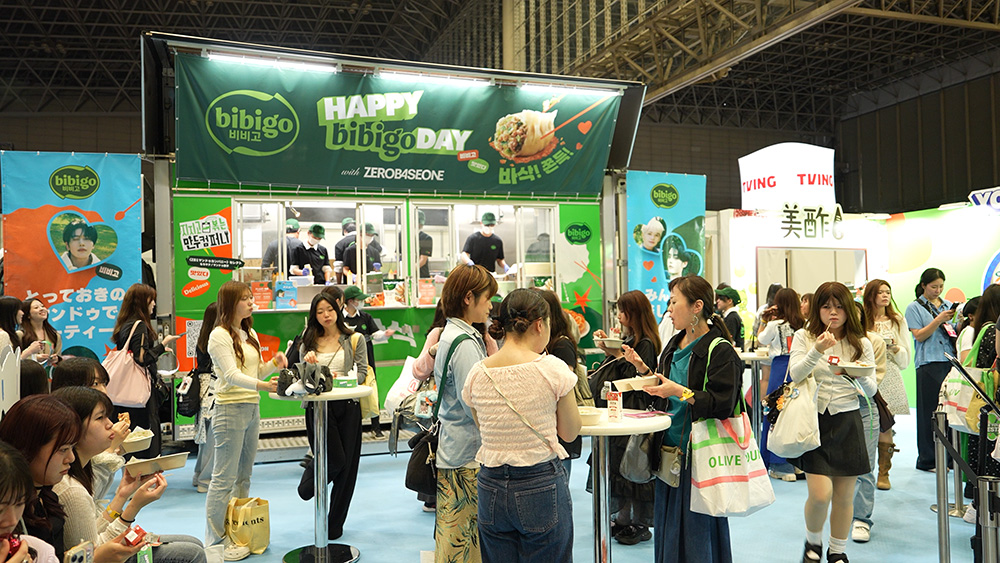
And its impact was clearly seen at a recent KCON in Japan.
Just look at the endless line of people waiting to try it.
Even Japan’s famously discerning consumers responded with praise: “It’s delicious.”, “It looks so easy to cook.”
That excitement quickly showed up in sales.
In its very first month, Bibigo Mandu Gyoza recorded sales five times higher than the original Bibigo Mandu did in its first month.
And that was not all.
The speed at which it expanded into stores was more than three times faster, helping it secure prime shelf space in Japanese supermarkets—once thought impossible to enter.
A friendly campaign featuring popular Japanese entertainer Eiko Kano played a major role in making the brand feel more familiar and approachable.
But this success was not just about making one great product.
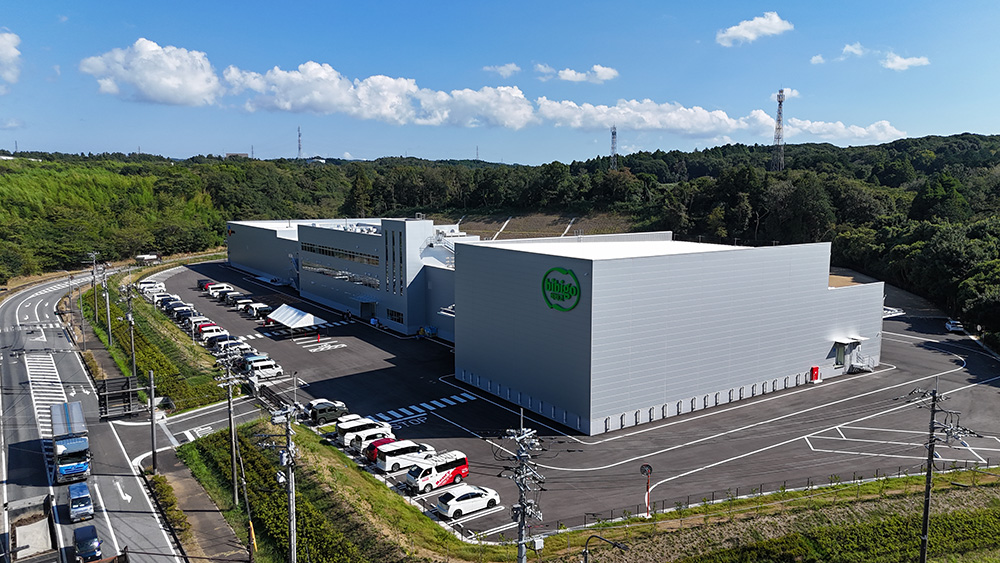
There was also a strong production base behind it: a new mandu factory built last year in Chiba, Japan.
Instead of shipping products from Korea, the company can now make mandu locally in Japan.
That made it possible to push ahead with technologies like crispy wings, and to respond smoothly even when demand surged.
Now, among countless gyoza products, ‘mandu’ is proudly carving out its place on Japanese tables.
And as Korean mandu keeps expanding beyond Japan, one question remains: Which country’s table will it win over next?
(The Recipe for Why It Works)
(Subscribe)
Finding a Solution Between Gyoza and Mandu
The approach bibigo chose was not simply localization. Rather than reshaping Korean mandu entirely to fit Japanese gyoza or pushing only the identity of Korean mandu as it was, bibigo chose to bring together the strengths of both. The result was bibigo Mandu Gyoza.
The product preserves the substance, chewy wrapper, and rich filling that define Korean mandu, while also delivering the juicy texture, crispy skirt, and easy pan-cooking method preferred by Japanese consumers. In that sense, it is a hybrid strategy carefully designed to harmonize the strengths of Korean mandu and Japanese gyoza in a single product.
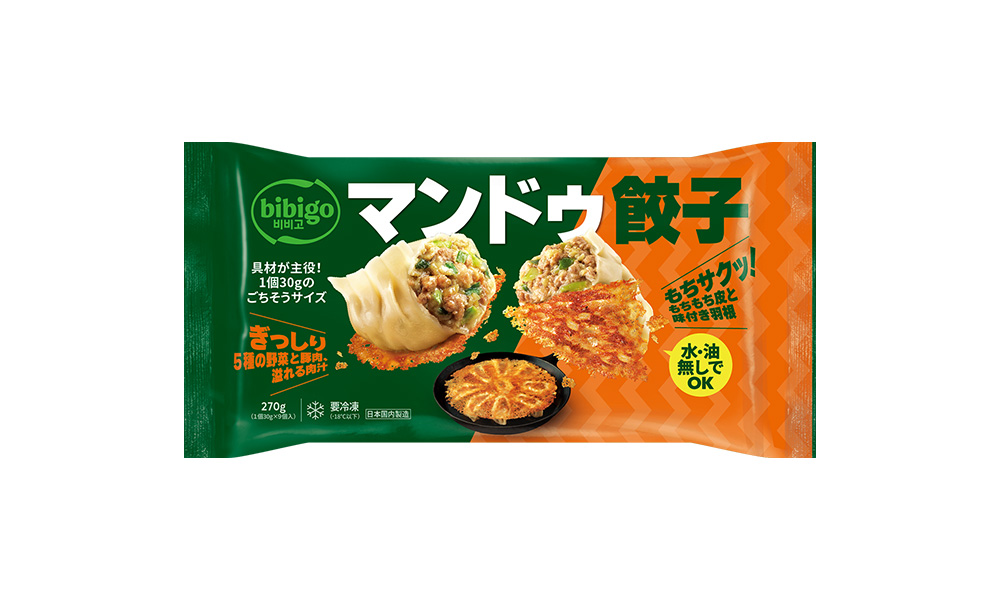
Of course, the process was not without challenges. Even slight changes in ingredient ratios affected the shape and texture of the crispy skirt, and entirely new equipment and production methods were required beyond those used in conventional mandu manufacturing. Because the product had to preserve the identity of Korean mandu while recreating the sensory appeal of Japanese gyoza, trial and error was inevitable. In the end, however, what mattered most was this: bibigo succeeded in creating a product that made Japanese consumers think, “This feels familiar, yet at the same time, new.”
Japanese Consumers Responded Quickly
The impact of this hybrid strategy first became visible on the ground. At KCON JAPAN 2026, long lines formed as visitors waited to try bibigo Mandu Gyoza. After tasting it, many responded naturally with comments such as, “It’s delicious,” and “It seems easy to prepare.” More than simply serving as a one-time K-food experience, the product showed clear potential to become something people could actually place on their everyday dining tables.
That response quickly translated into measurable performance. In its first month after launch, bibigo Mandu Gyoza recorded sales approximately five times higher than those of earlier bibigo mandu products in their first month. The speed at which it expanded into retail outlets was also more than three times faster, helping it secure placement on key shelves in Japanese supermarkets. Friendly marketing efforts, including a campaign featuring popular Japanese entertainer Eiko Kano, further helped lower the psychological barrier to the brand.

The Infrastructure Behind the Success
Still, it would be difficult to view this achievement as the success of a single new product alone. Behind it stood the production foundation that made such growth possible: the mandu plant established last year in Chiba, Japan. Moving beyond the previous model of shipping products from Korea, CJ was able to build a system that allowed production and supply to take place directly in Japan, fundamentally changing the way it could respond to the market.
This made it possible to implement new technologies more quickly at the local level and to supply products more reliably even when demand surged. Ultimately, bibigo’s success in Japan was not created by a strong product alone. It was made possible because the company had also built the infrastructure needed to produce and deliver that product locally, at the right time, and at scale.
Mandu Standing Beside Gyoza
The significance of bibigo Mandu Gyoza goes beyond the fact that a new product sold well in Japan. More importantly, it is creating a new place for mandu by name within a market long defined by gyoza. Rather than trying to compete by looking like gyoza alone, bibigo has preserved the identity of Korean mandu while redesigning it in a way that fits local food culture.
In a market once thought to belong only to gyoza, mandu is now steadily building its own presence. The next question is where this change, which began at the Japanese table, will lead. It will be worth watching which country’s dining table Korean mandu will reach next—and where its next strategic move may set a new standard.