Back in 2022, I traveled to the United States to cover bibigo, which at the time was marking its 10th anniversary in the U.S. market. I visited major supermarkets in Los Angeles lined with bibigo products, and toured the newly built Vermont plant where mandu and seaweed products were being made. From there, I headed to South Carolina, where THE CJ CUP was being held. I still remember how striking it felt to see blond Western spectators enjoying Korean food, including mandu, at a bibigo booth set up on one side of the course.
About four years later, in May 2026, I visited THE CJ CUP Byron Nelson 2026 at TPC Craig Ranch in McKinney, Texas. With this year marking the tournament’s 10th year since it was first launched in 2017, I once again found myself in the United States to produce related content. And in the four years that had passed—long in some ways, short in others—a great deal had changed.
bibigo Concessions at the Center of THE CJ CUP Show How Far K-Food Has Come
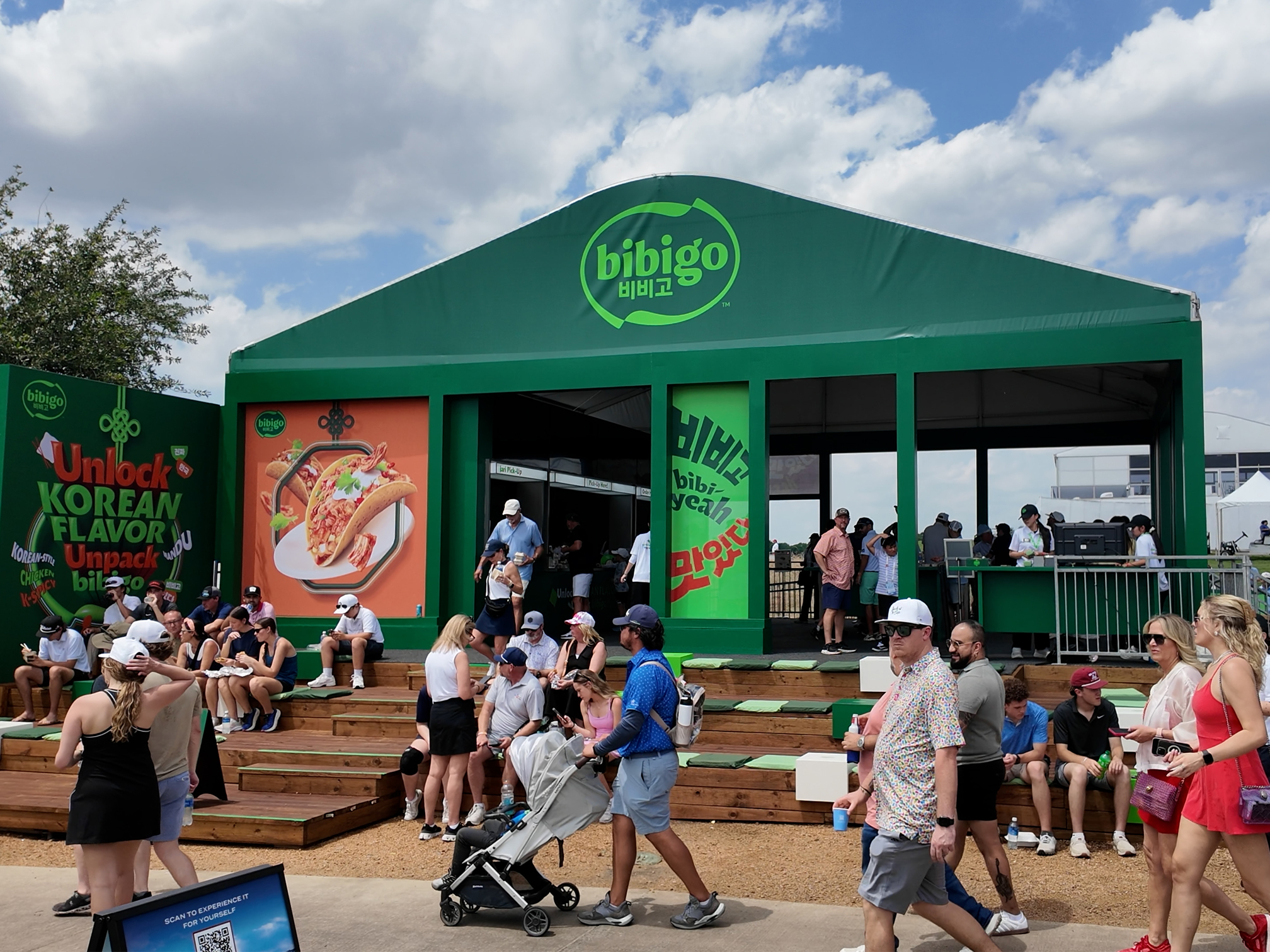
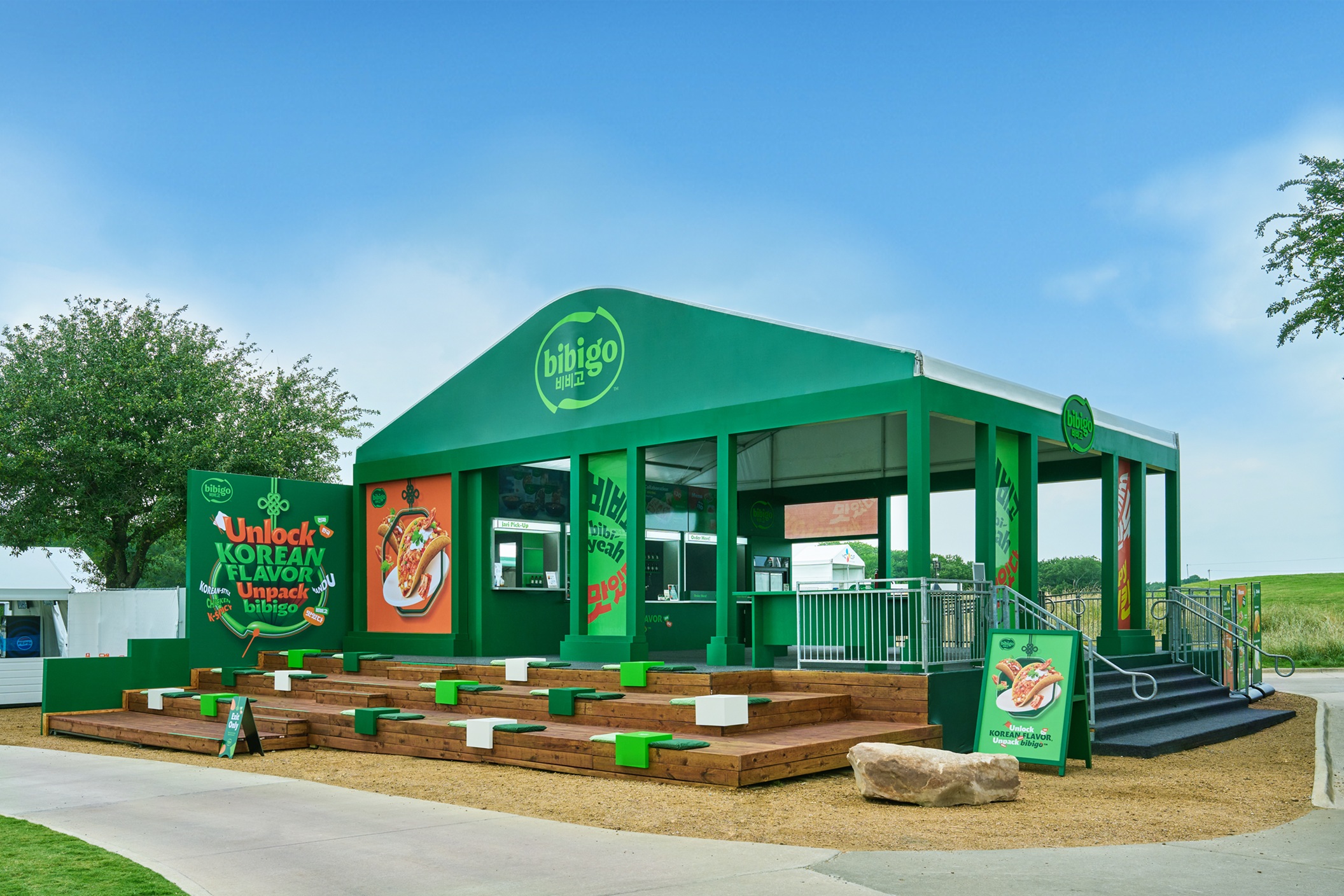
The most visible change was the bibigo concessions set up in front of the 7th and 17th holes. At the 7th-hole concession, CJ CheilJedang created a casual dining concept and introduced menus featuring bibigo products in collaboration with renowned Korean and international chefs, including Yoo Yong-wook, Park Jung-hyun, and Beau MacMillan. A tiered deck, reminiscent of the riverside terraces at Hangang Park, was also installed so visitors could enjoy their food while watching the tournament.
The concession at Hole 17 offered a different experience—one centered on the spicy side of Korean cuisine. Unlike Hole 7, it was operated in a grab-and-go format, making it easy for visitors to quickly purchase bibigo menu items. Chef Beau MacMillan and Chef Yoo Yong-wook each created snack-style menus using bibigo mandu and K-sauces, with both original and spicy versions available
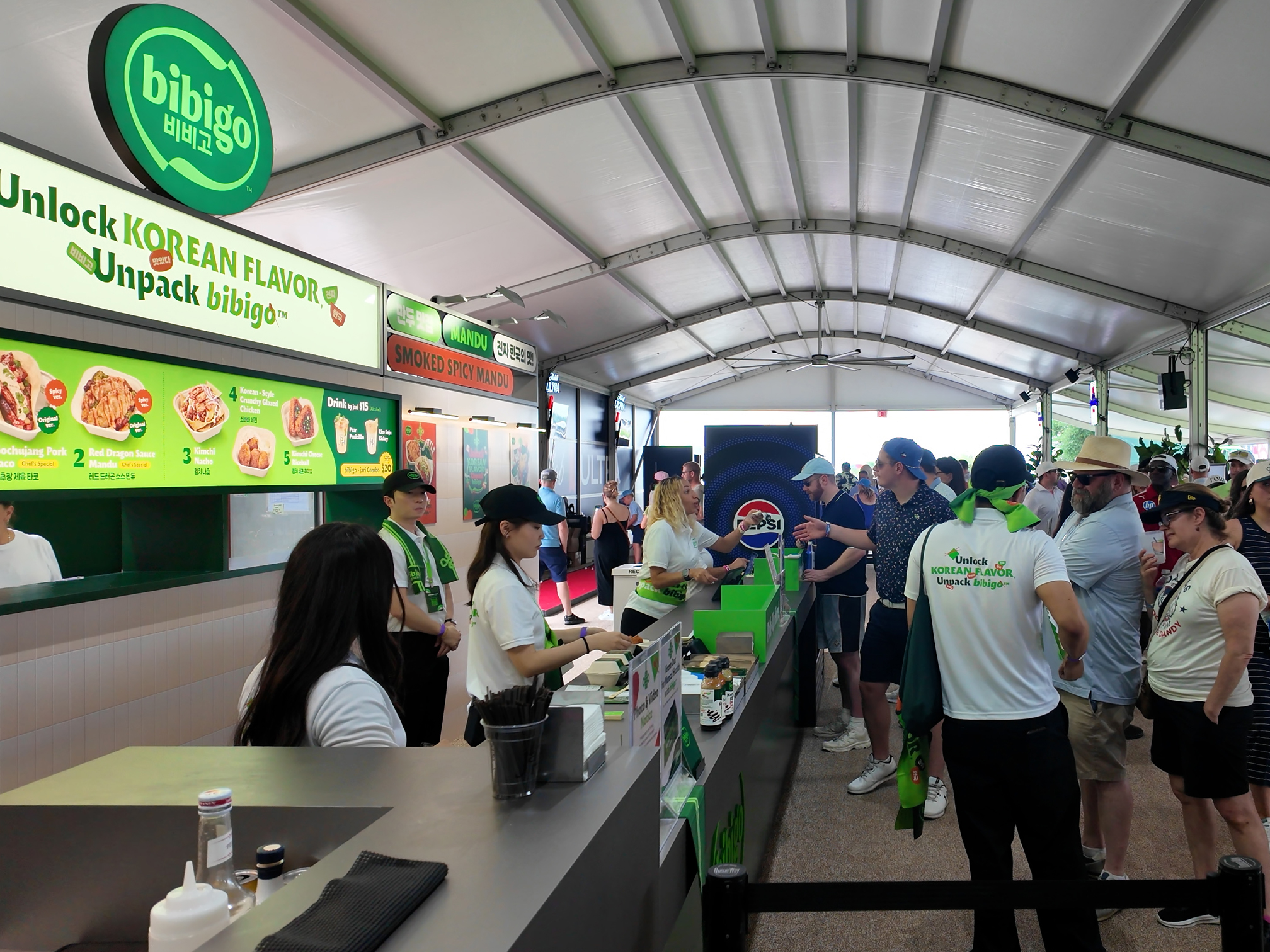
The bibigo concessions were no longer tucked away on the edge of the course. They stood at the center of the venue, and on a much larger scale. They no longer felt like what we typically think of as a “booth” designed simply to promote Korean food or the bibigo brand. The galleries who visited the concessions looked over the menu and ordered without hesitation, as if eating Korean food had already become familiar to them. It stood in sharp contrast to what I had seen four years earlier, when visitors lingered in front of the menu board, uncertain and curious.
In fact, THE CJ CUP has become known for its food not only among players, but among galleries as well. At the 7th-hole concession, I spoke with Jordan Quallick, who was eating Tex-Mex mandu and kimchi rice balls, and asked him what he thought about Korean food and bibigo. “I love the bibigo mandu and seaweed snacks they sell at Costco,” he told me. “I’ve come to THE CJ CUP over the past few years, and the food is always really good.”
From bibigo to jari, House of CJ Showcases the Full Spectrum of K-Food
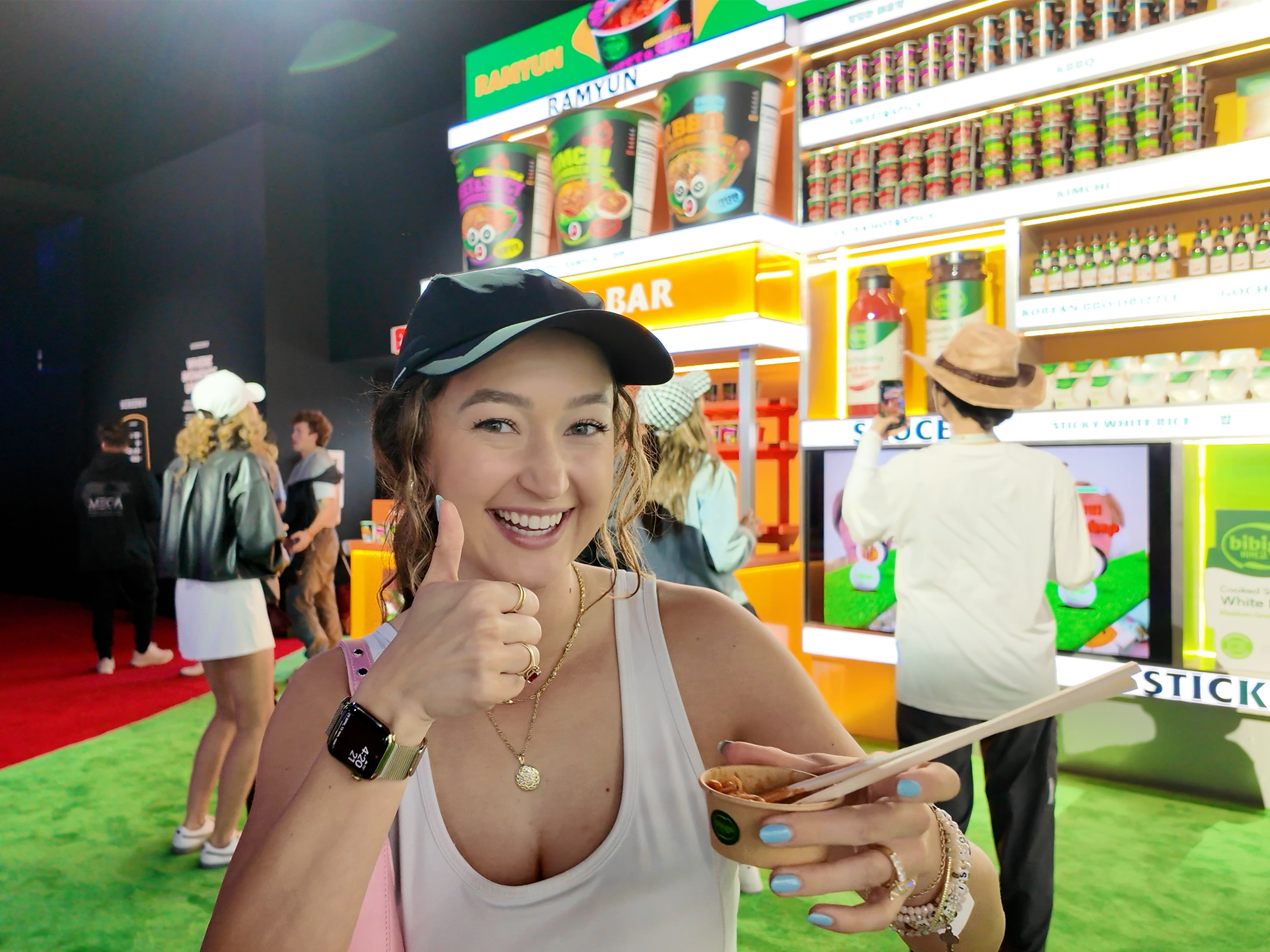
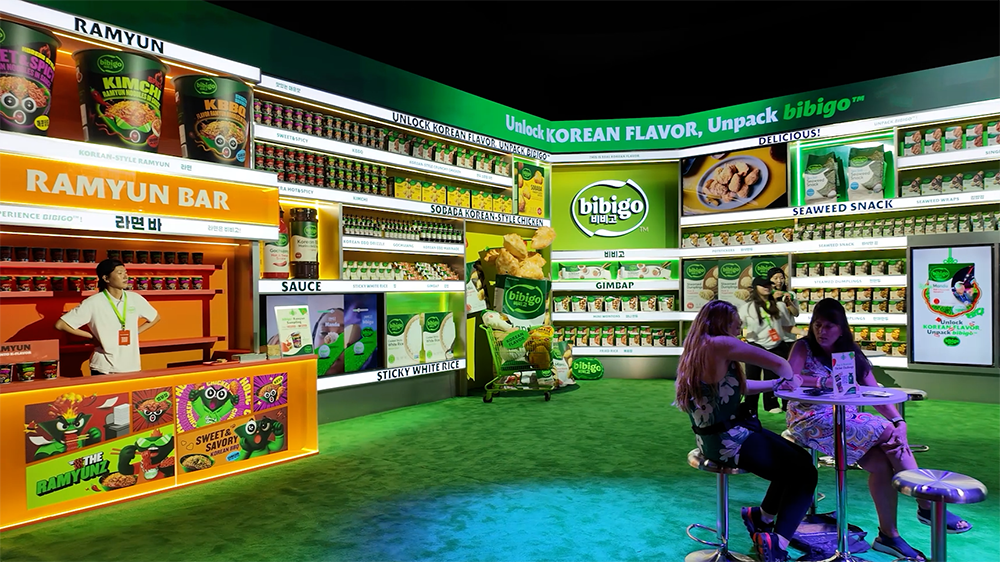
Between the 7th and 17th-hole concessions stood a massive indoor experience space: House of CJ. Visitors could enjoy Korean food there as well. Inside the bibigo zone, designed around the concept of a giant pantry, a towering display wall featured the full range of bibigo products sold in the United States. Looking up at the shelves stacked all the way to the ceiling, I felt almost overwhelmed by the scale of it. It was a visual reminder of just how far bibigo’s presence in the U.S. market has come.
One side of the bibigo zone offered samples of bibigo Noodles Sweet & Spicy. Perhaps because Korean food is so widely associated with bold heat, many visitors looked nervous as they received their sample cups, repeatedly asking just how spicy it would be. But the moment the noodles reached their mouths—often after some tentative chopstick attempts—their worried expressions quickly turned into delight, and then into an enthusiastic thumbs-up.
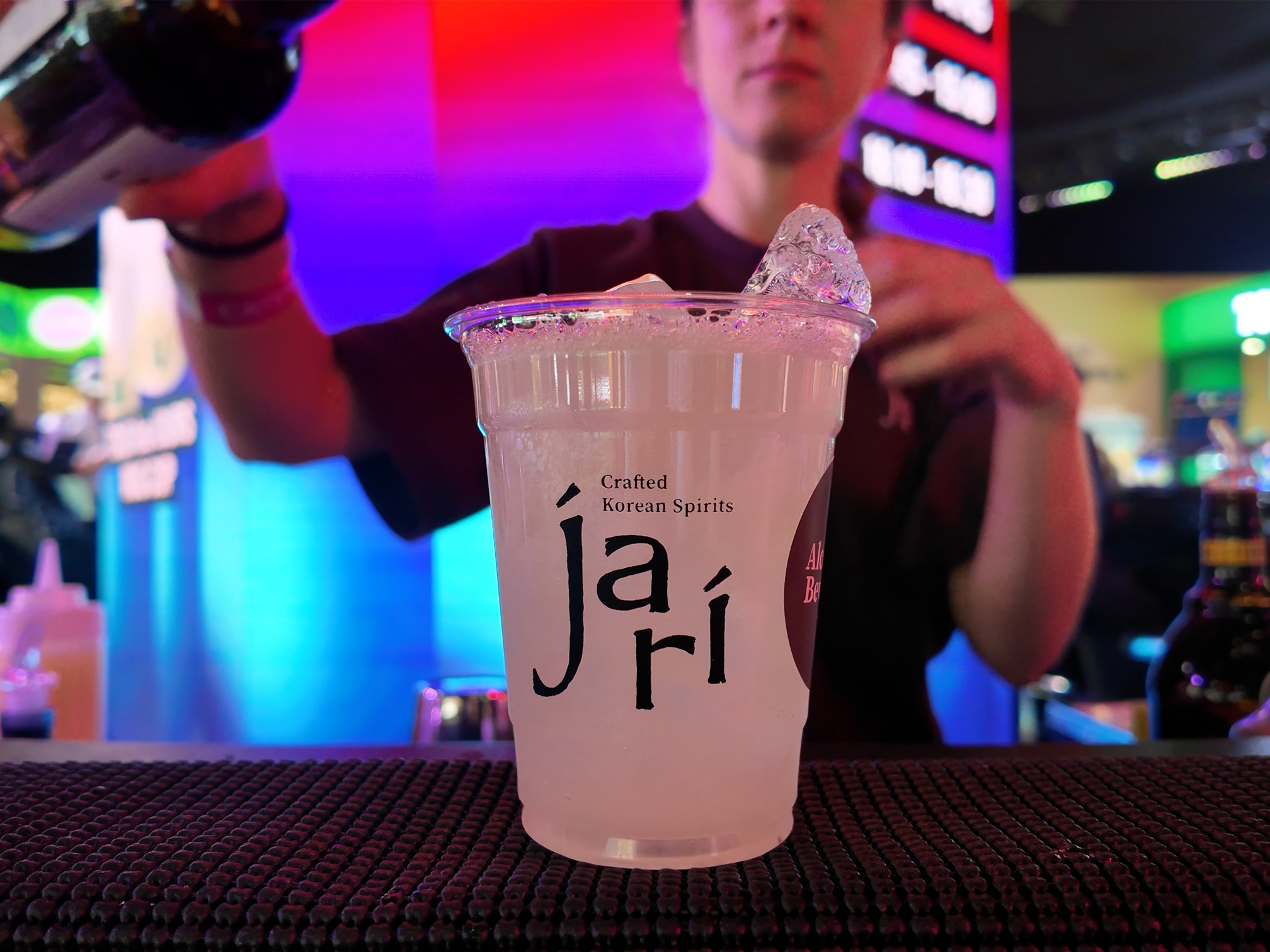
At the center of House of CJ, a bartender was making something a little more unexpected: cocktails using ‘jari*’, CJ CheilJedang’s premium distilled spirits brand. Set to launch in the U.S. market later this year, jari presented four cocktails, including Black Seoul, built around partner spirits such as Munbaeju and Gamuchi Soju. Watching a non-Korean bartender create cocktails with Korean traditional liquor was, in itself, a moving scene.
*CJ제일제당이 K-리커(Liquor) 세계화를 위해 국내 중소 양조장과 협업해 만든 프리미엄 증류주 브랜드
Cocktails made with jari were also available at the 7th and 17th-hole concessions. It was especially striking to see foreign visitors enjoying the tournament with Korean food in one hand and a cocktail made with Korean traditional liquor in the other, raising their glasses in celebration. Watching them, I found myself wishing I could join the toast—but since I was there for work, I had to settle for admiring the moment from afar. That said, I can confirm this much: the jari cocktail I had after work was excellent.
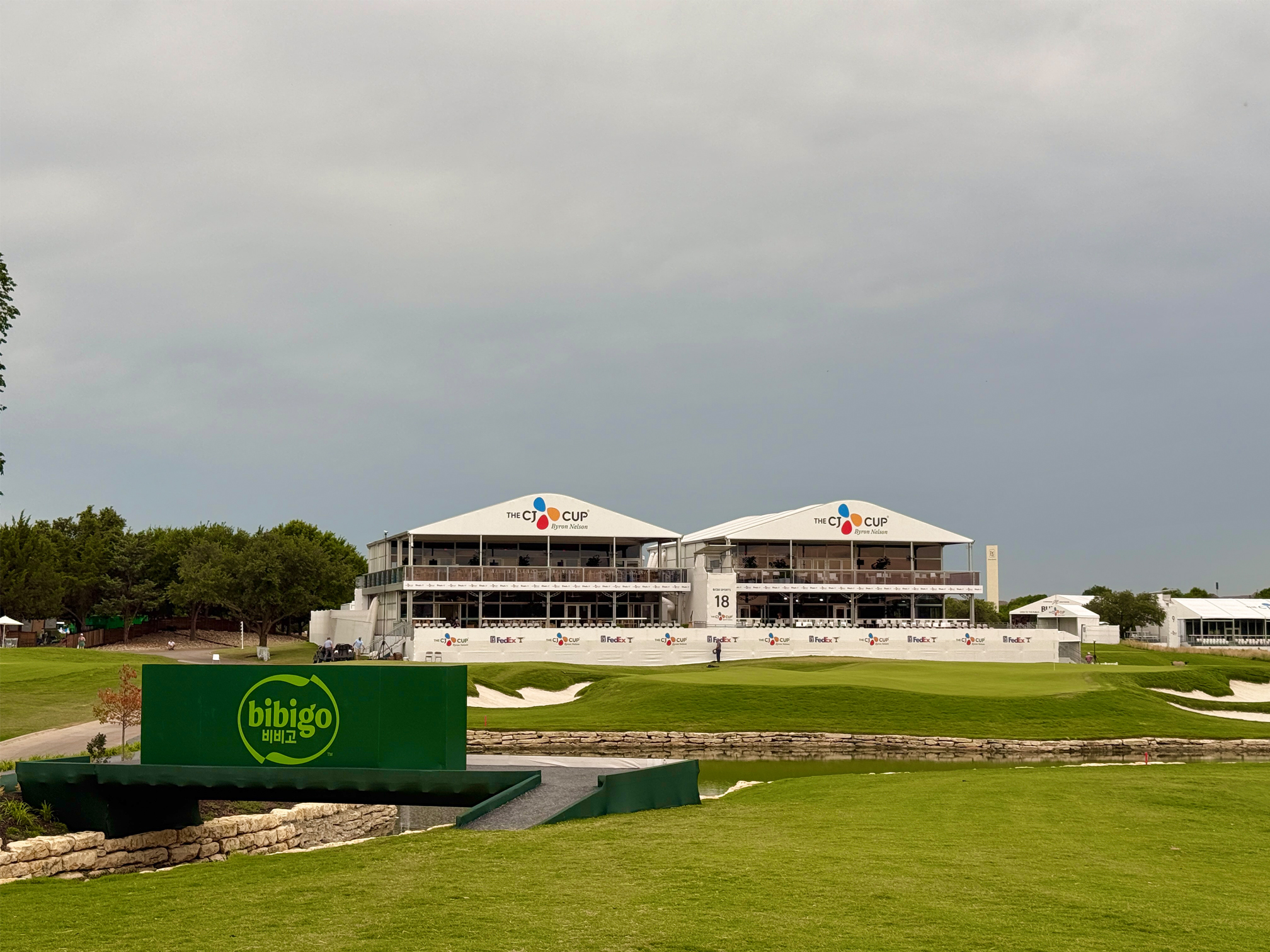
By the time I had made my way around the entire venue, the sense of curiosity I had felt four years earlier had turned into something much heavier and deeper: pride. The bibigo concessions, which had once started out as a booth on one side of the course, had now become a central part of the tournament experience. And alongside them was jari, preparing for its own global leap forward. This year’s visit to THE CJ CUP felt like a vast showcase of K-food’s limitless potential and expanding reach.
I do not know when I will return to the United States again. But when I do, how much further will K-food, bibigo, and jari have evolved? As I looked out over the empty course after the galleries had all gone home, I found myself thinking that just as clearly as the crisp sound of golf shots had echoed across the grass, the future of bibigo reaching even farther across the globe felt all the more exciting.