A new chapter in the globalization of Korean cuisine is exactly what Cuisine.K is writing. For Korean food to become more frequent and expected mainstays on dinner tables around the world, it must do more than just deliver flavors—it must also call forth a cultural and emotional connection.
CJ CheilJedang’s Cuisine.K, a platform nurturing the next generation of K-food chefs, has opened a Korean pop-up restaurant in Hong Kong. This marks the first overseas pop-up since the platform’s launch in August 2023 and the first step toward strengthening its global outreach for a more systematic approach to nurturing young chefs. And what better place is there for a pop-up aimed at building international competencies than Hong Kong, a global gastronomic hotspot?
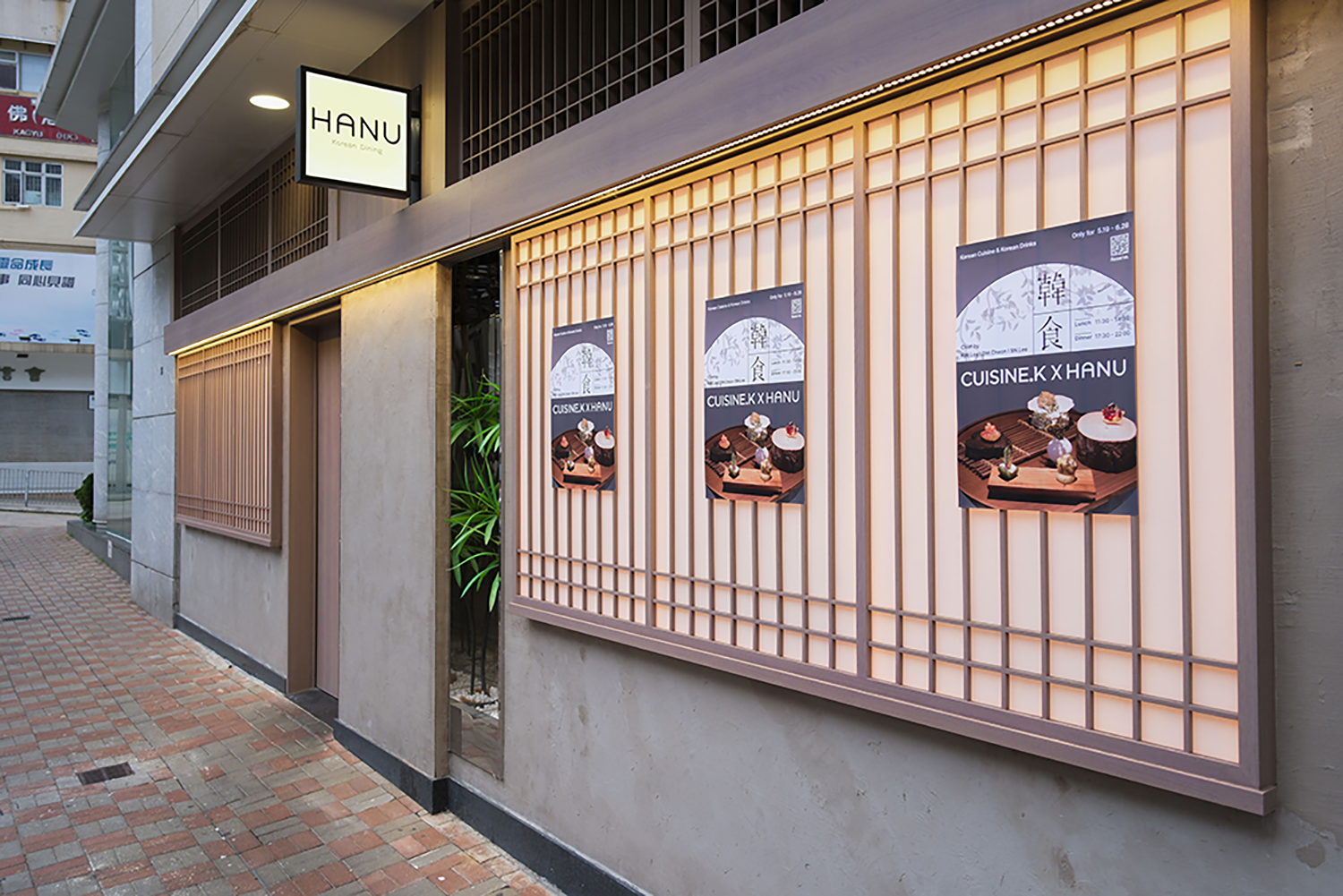
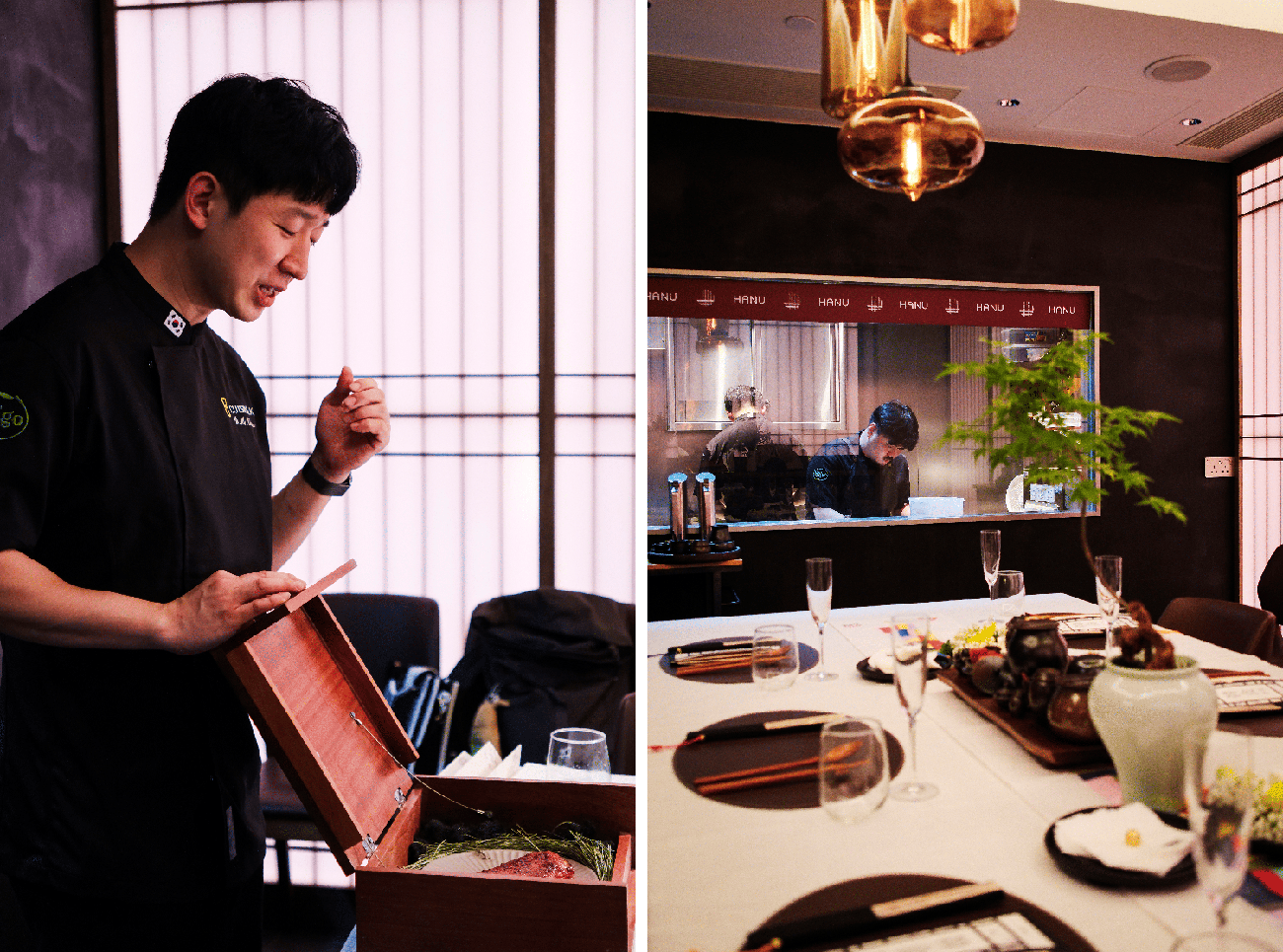
Until May 31, the pop-up was housed at AKATSUKI in Central, Hong Kong’s central business district. Then, as of June 1, a course meal developed by three Cuisine.K Alumni—Lee Kyoung-won, Cheong Dong-min, and Lee Su-neung—was presented at a Korean restaurant called HANU in Wanchai.
Designed to bridge cultural resonance and K-food’s identity
As the heart of Asia’s culinary scene, Hong Kong is home to trend-savvy diners who also appreciate the depth of flavor. This pop-up focused on bridging that gastronomic sensibility with Korea’s traditional identity. Great thought went in from the planning stage to provide not just food but also to present a complete dining experience that flows seamlessly like a single narrative.
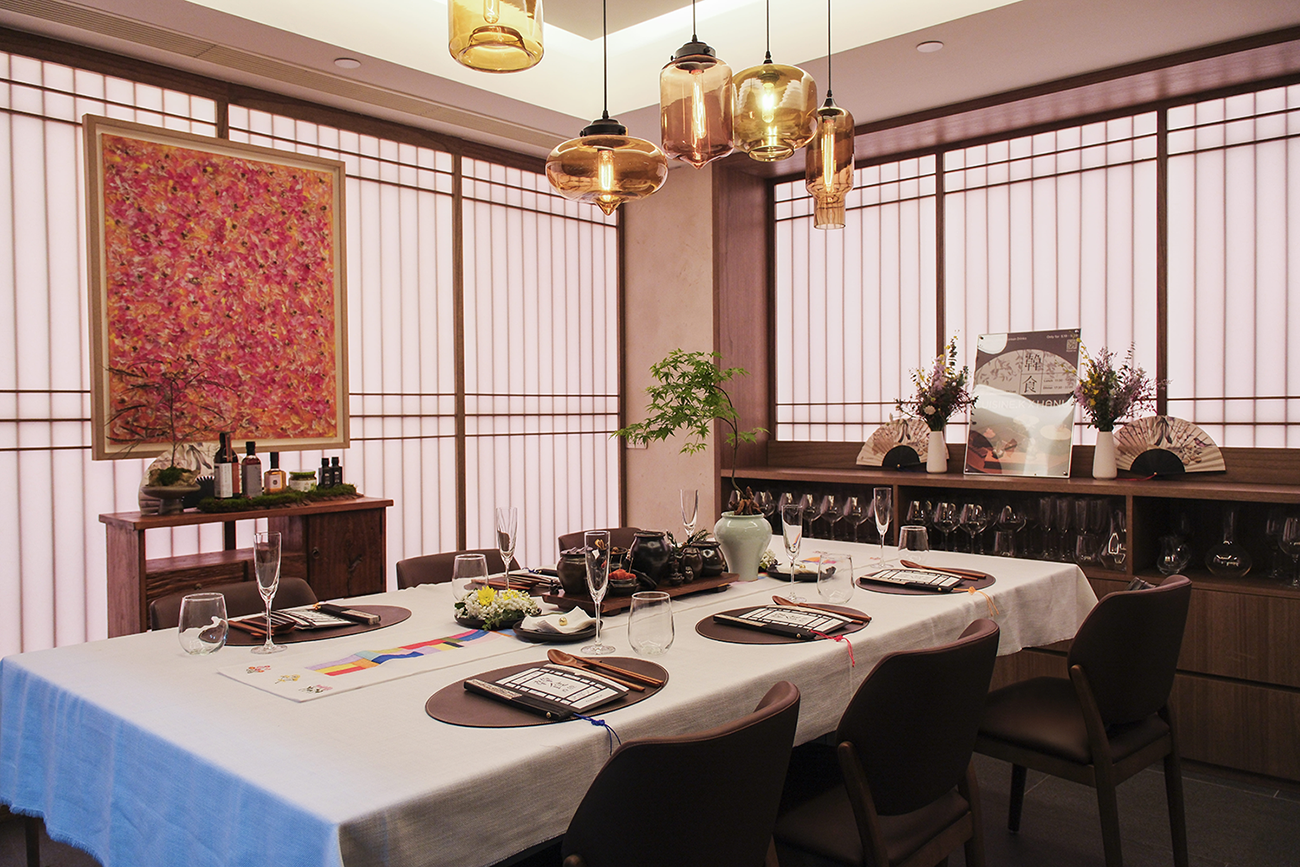
The space was designed around the central theme of jang, fermented sauces that form the cornerstone of Korean cuisine. To make these unfamiliar ingredients and flavors more approachable, we turned to ink wash painting, a shared cultural heritage, as the design motif that tied the space together.
To cordially invite customers to our Korean culinary journey, we deliberated intensively and deeply on the kind of dining experience we wanted to deliver. Inspired by the traditional Korean lattice doors and windows that are part of HANU’s interior design, we incorporated the same lattice pattern into the menu design for aesthetic cohesion, allowing diners to experience the texture of Korean cuisine as soon as they are seated.
From first taste to the table setting: Weaving a culinary narrative
The course opens with three traditional flavors. The small tasting platter, featuring clear dongchimi (watery radish kimchi), hapjajang (mussel sauce), and pickled plums, forms the opening scene of the meal that welcomes the diners. The clean crispness and deep umami of the fermented openers build anticipation for the appetizer and amuse-bouche to follow.
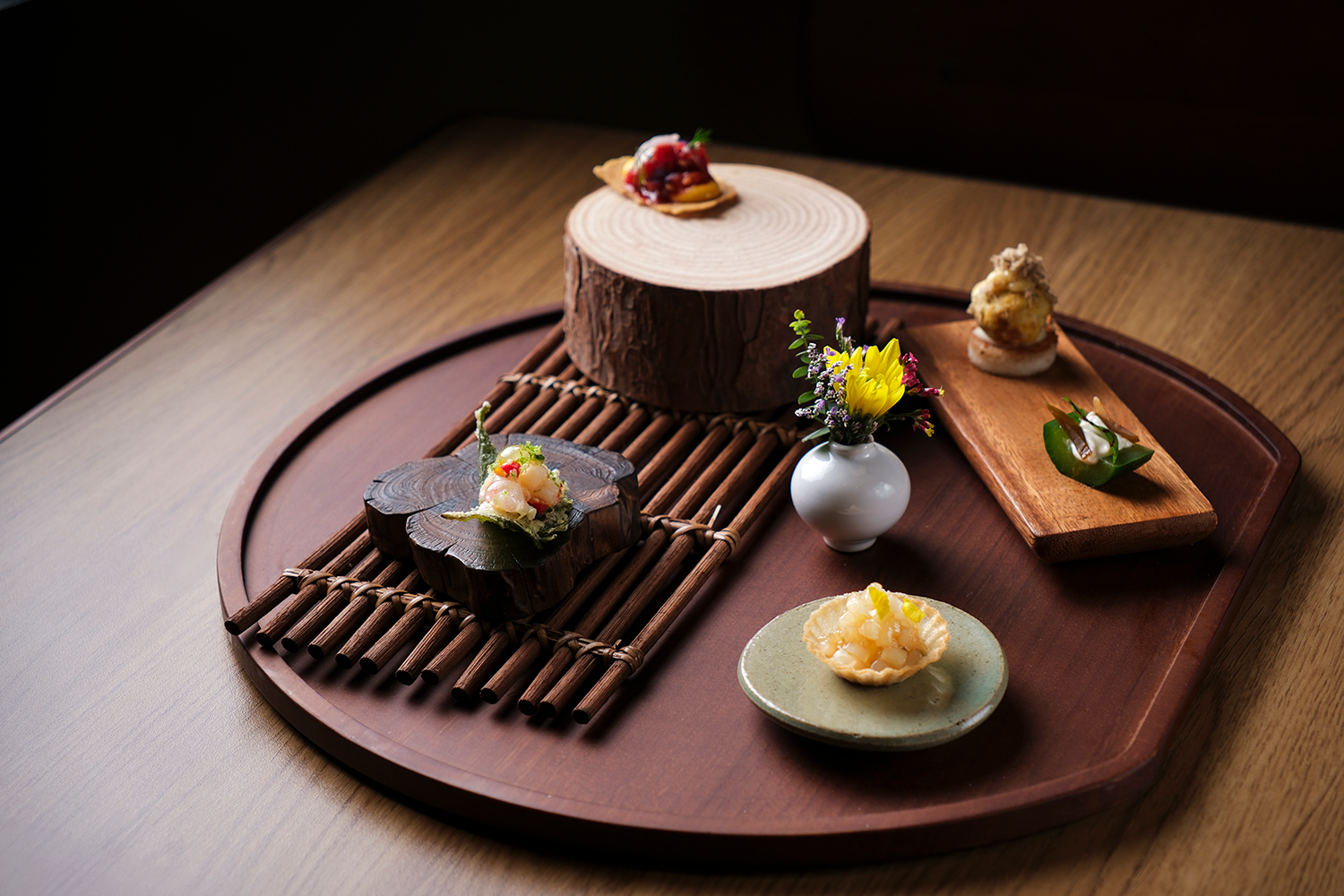
Next up is the ‘Five Bites of Myeongin,’ an appetizer platter that makes use of fermented ingredients crafted by five leading food artisans of Korea*. The five small but masterfully executed dishes bring together traditional flavors and a modern aesthetic. As a succinct summary of the diverse textures and aromas of Korean cuisine, the platter beautifully rounds out the meal’s first impression.
*Soy sauce (Artisan Cho Jeong-sook), Black vinegar (Artisan Hyun Kyung-tae), Plain vinegar (Artisan Han Sang-jun), Baekryon rice wine (Artisan Kim Yong-se), Pickled plums (Artisan Hong Ssang-ri)
Korean course customized for the local palate and sensibility
As the main course unfolds, dishes tailored to the culinary culture and tastes of local Hong Kong diners begin to appear. Dongchimi mulhoe (cold seafood soup) is a modern reinterpretation of dongchimi. Hapjajang buckwheat noodles and mystery chicken bring together Korean fermented sauces and the philosophy of yaksik dongwon, the idea that food and medicine share the same origin.
Then there is the spicy stir-fried duck and the much beloved ganjang gejang (raw crabs marinated in soy sauce). These standout dishes were accompanied by a bowl of white rice to complete the classic Korean spread called ‘bansang.’
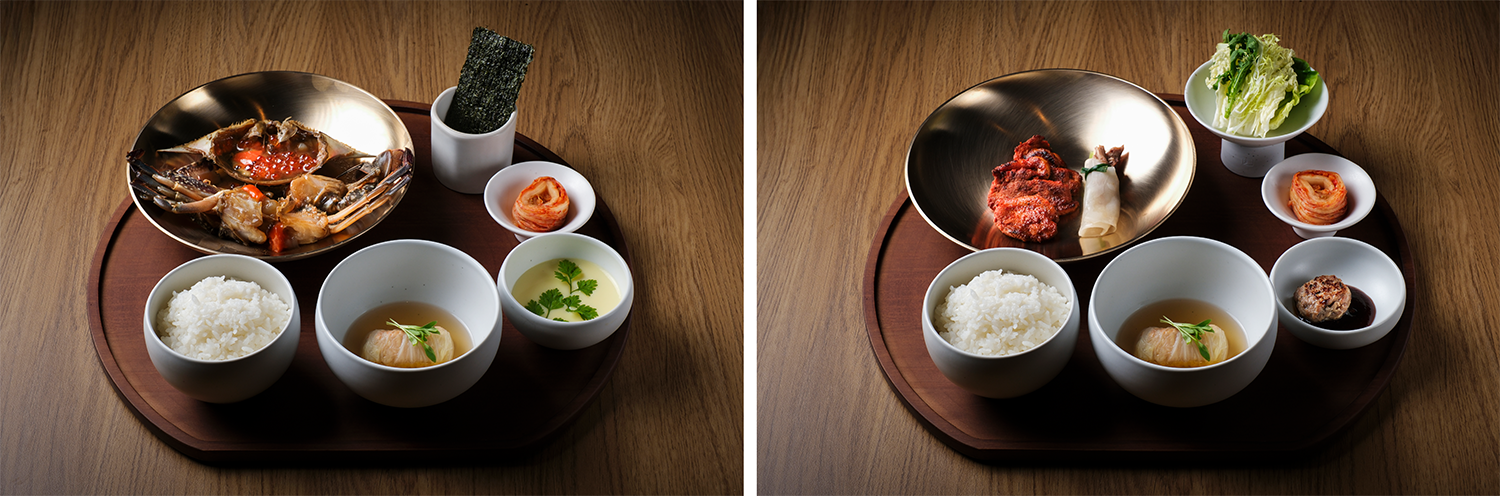
Ganjang gejang, once considered difficult to popularize globally due to its bold flavor and unfamiliar texture, left a lasting impression on local gourmets. The ganjang gejang at this pop-up embodied the balanced harmony between deep yet subtle fermentation and the restrained savor of soy sauce. One diner deemed it the best ganjang gejang she had ever had, and even HANU expressed interest in adding it to their official menu.
A strategic step for the globalization of Korean cuisine
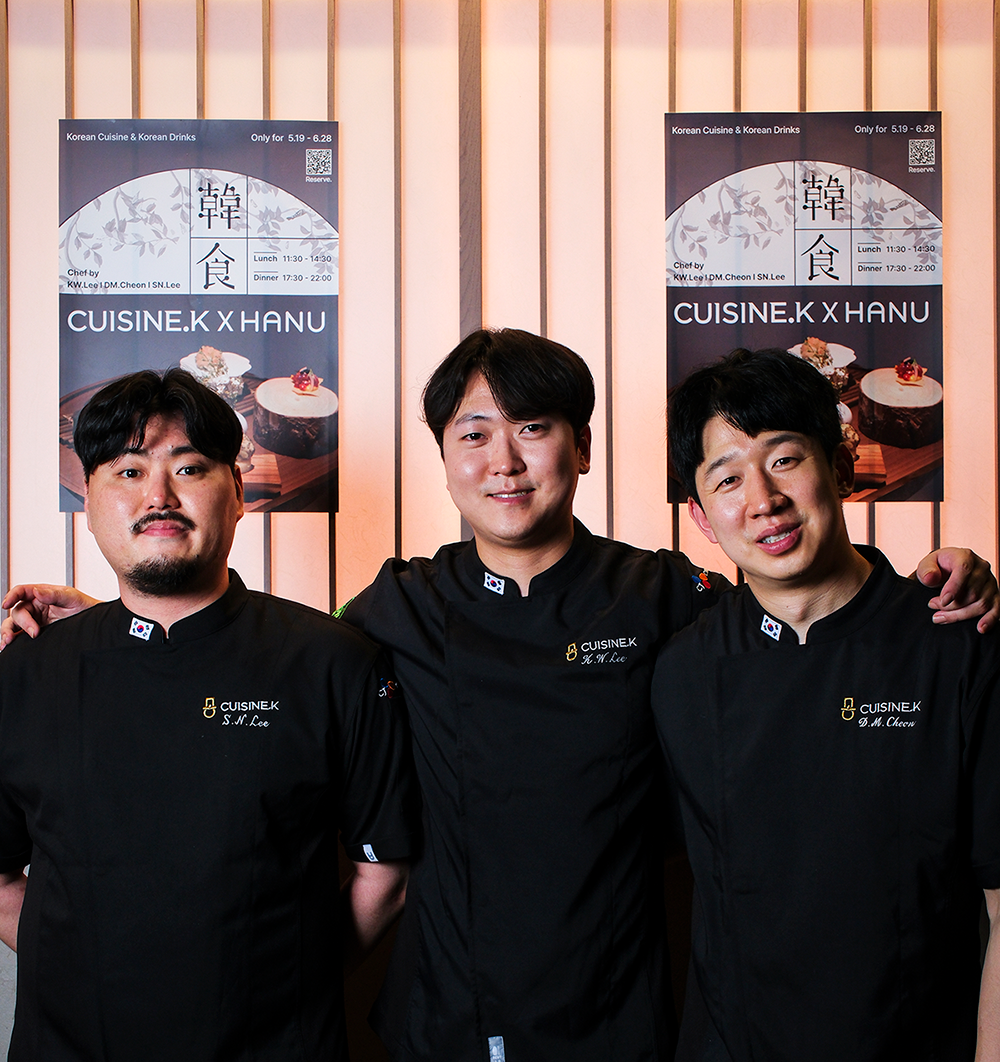
This Hong Kong project was not just a one-time pop-up. Planned and run by three next-generation chefs of Cuisine.K, every stage of the process—from not only the menu planning but also to the space layout, visual design, and communication touchpoints—was strategically aimed at the globalization of Korean cuisine. This was preceded by extensive research and analysis of local dining trends and consumer preferences to identify the Hong Kong gourmet market’s aesthetic and culinary standards and expectations.
The customer response on the scene was a promising sign that the globalization of Korean cuisine is not just a passing trend but may expand into a cultural mainstay. A tangible proof of this possibility was the fact that the pop-up was fully booked night after night.
Following this Hong Kong pop-up, which was the first step in the effort to establish Korean cuisine in the global gourmet scene, Cuisine.K will continue with the journey to promote the quintessence of Korean cuisine around the world. What cities will follow and what connections will be made? Stay tuned as Cuisine.K writes the next chapter in the story of Korean cuisine’s potential and expansion.