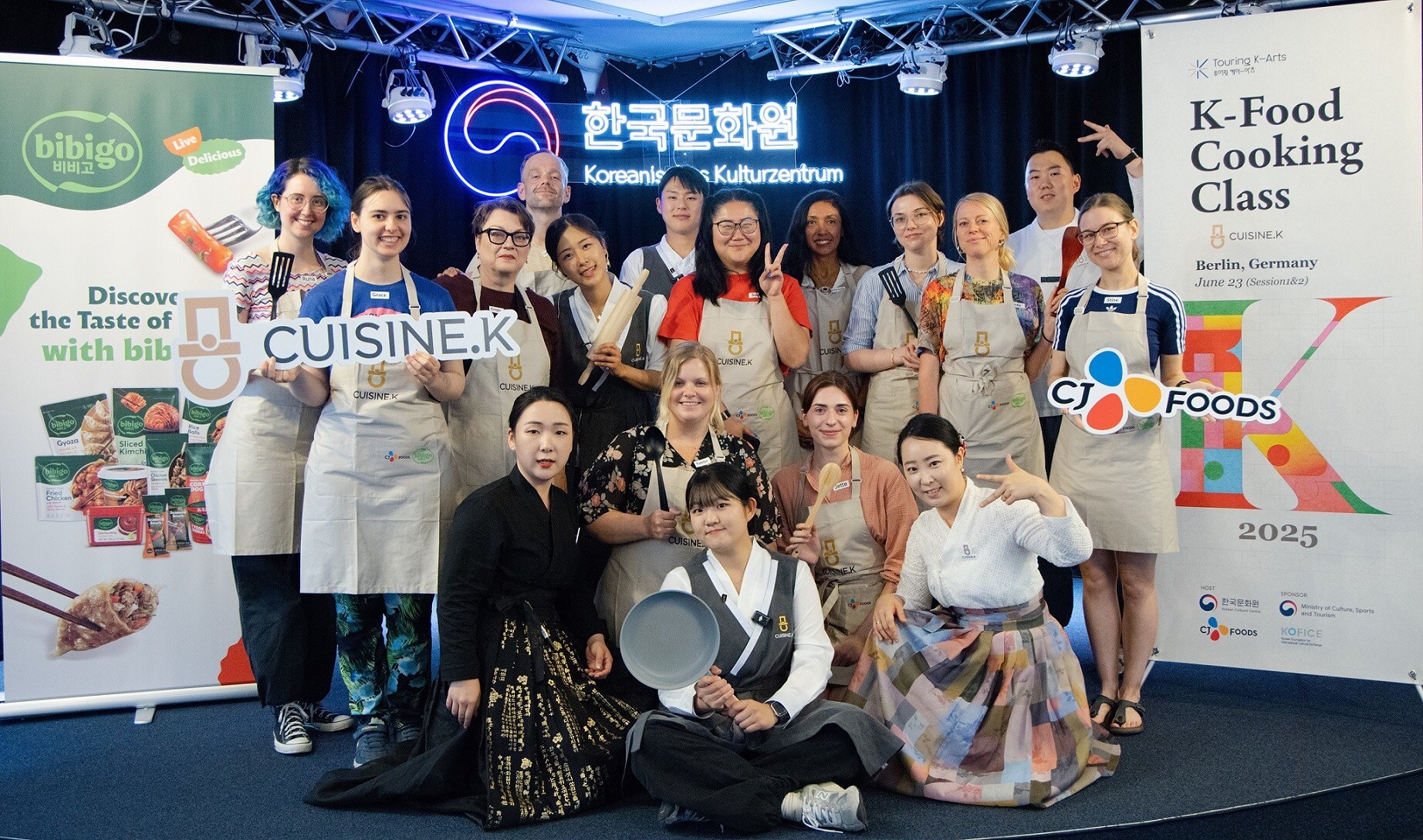
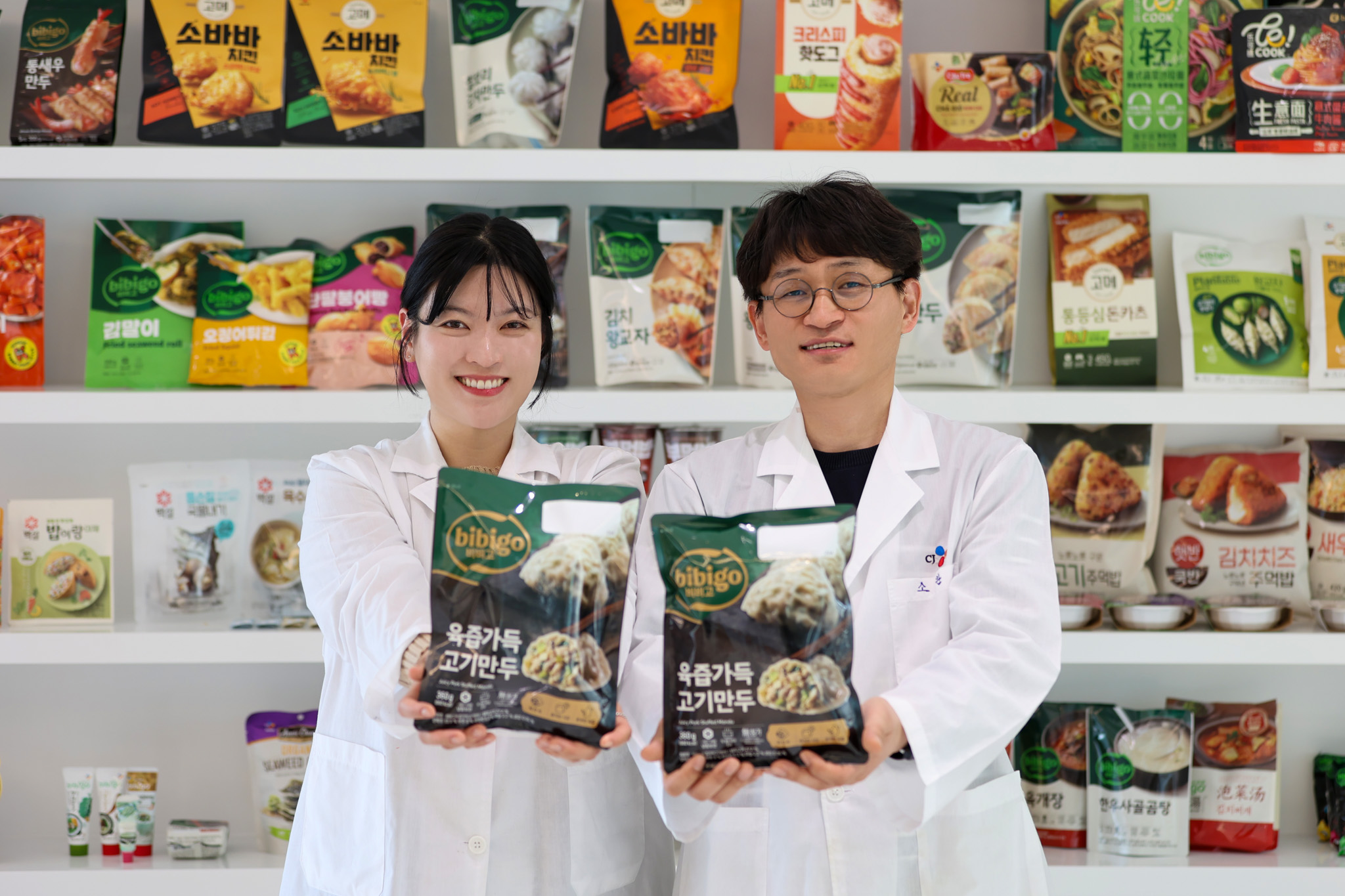
Cuisine.K is a CJ CheilJedang initiative dedicated to advancing and globalizing Korean cuisine by discovering the next generation of young K-food chefs. The program focuses on nurturing promising talent by offering opportunities such as Master Class and dining internships in Korea. The pop-up restaurant program provides aspiring chefs with an actual restaurant space and marketing support to simulate the experience of running their own restaurant. Participants design their own menus and interact with guests, gaining hands-on experience and insight into the full spectrum of operating and managing a Korean dining establishment.
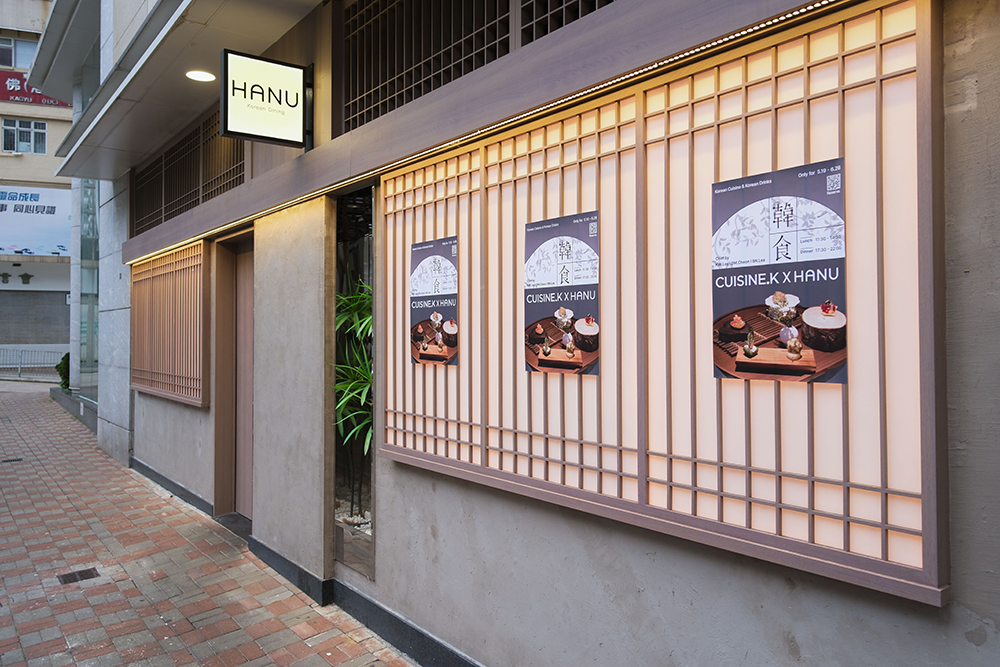
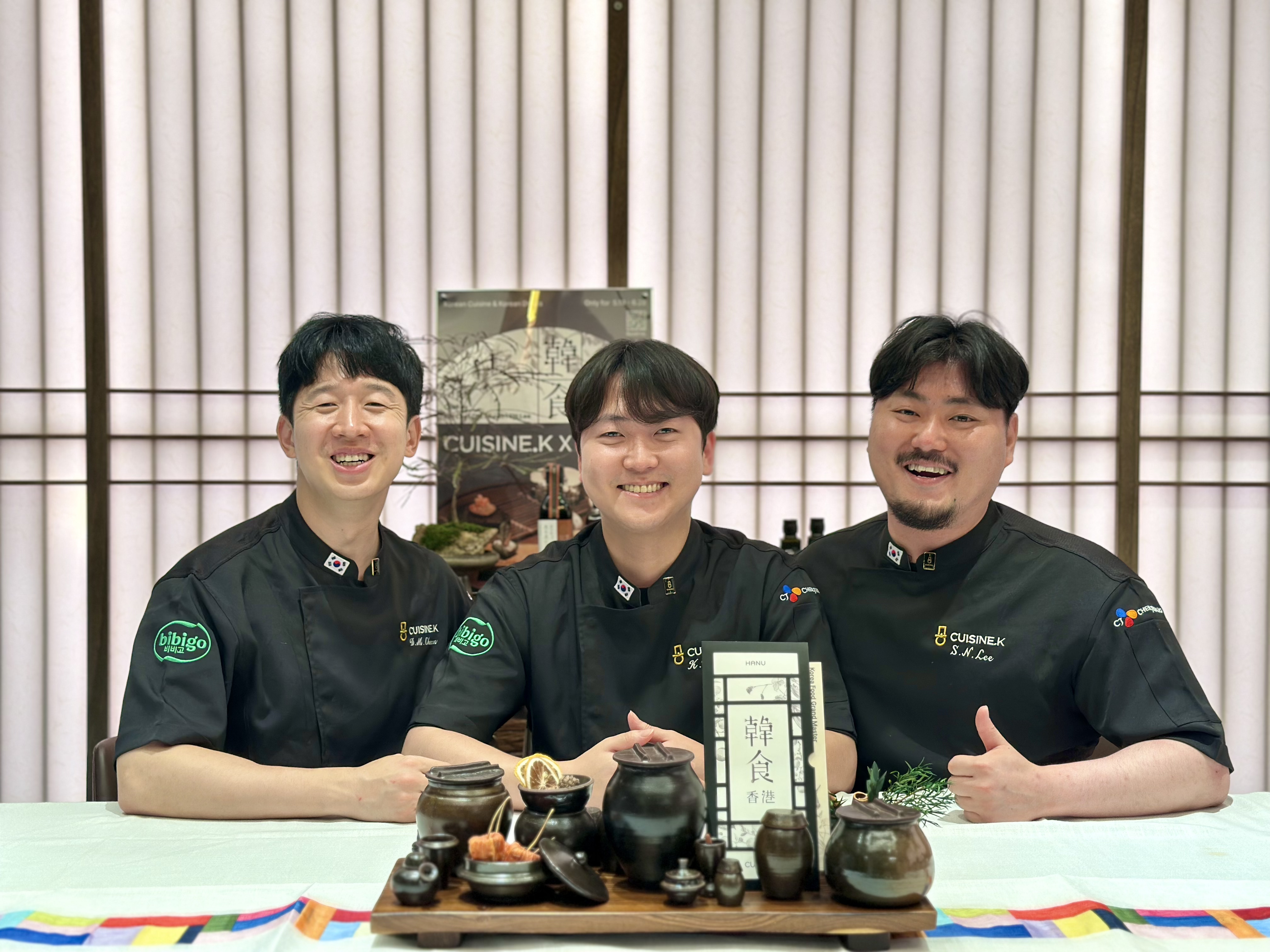
A Korean dining experience embodying the depth of fermentation was unveiled in Hong Kong: CJ CheilJedang Cuisine.K’s first global pop-up event. Hong Kong serves as a busy crossroads of global cuisines. At HANU, a Korean restaurant located in Wanchai, a one-month dining pop-up event was presented by chefs Lee, Kyoung-won (Cuisine.K Class 1 alumnus); Cheon, Dong-min (Cuisine.K Class 2 alumnus); and Lee, Su-neung (a Korean cuisine major).
The trio developed a multi-course meal that highlighted the keyword “fermentation” under the theme "Authentic Yet Trendy.” They met with patrons face-to-face, adapting the menu to better suit their customers’ tastes day after day. Signature dishes included dongchimi mulhoe (a refreshing cold seafood soup made with lightly fermented radish water kimchi), hapjajang buckwheat noodles (a unique noodle dish featuring a concentrated Korean mussel condiment), ganjang gejang (raw crabs marinated in soy sauce, renowned for their rich umami flavor), and chicken with black garlic (made with nutritious and flavorful aged garlic). The meal culminated in a dessert made with Korean melon, chamoe, offering a light and sweet finish. The course meal integrated Korean flavors with Hong Kong ingredients, pushing the boundaries of Korean cuisine. The chefs themselves recounted how the experience expanded their culinary horizons.
Q. What was your attitude and approach as you prepared for the Hong Kong pop-up project?
Lee, Kyoung-won
I had previously participated in the Cuisine.K pop-up project in Korea, but the Hong Kong pop-up was a completely different experience. It wasn’t just about showcasing Korean cuisine – we had to think about how to make it resonate on a global scale. Three chefs coming together to reinterpret fermentation, a cornerstone of traditional Korean cuisine, was a novel attempt in and of itself.
Cheon, Dong-min
When we first discussed the direction for the project, we all connected with the theme “Authentic Yet Trendy.” Our goal was to reinterpret Korean cuisine without compromising its core identity. We constantly exchanged ideas on how to modernize traditional ingredients like fermented sauces, dongchimi, and hapjajang. The entire experience gave me greater clarity about my own culinary philosophy.
Lee, Su-neung
On a personal note, this pop-up was especially meaningful as it marked my very first experience taking full charge of kitchen operations on an international stage. From navigating local systems and sourcing ingredients to understanding and catering to diners’ preferences, shifting conditions, and limited resources, each day presented new challenges. Nevertheless, I was determined to maintain a high level of execution. As a chef, I found this experience to be hands-on in every sense, involving myself not just in cooking but also in operational responsibilities.
Q. How was the process of curating the dishes for the course?
Lee, Kyoung-won
We focused more on “subtracting” rather than “adding.” To truly capture the distinct flavors of fermented sauces and ingredients, we determined that it was more important to pare things back. We aimed to preserve the essence of each ingredient—making dongchimi from scratch and simmering hapjajang ourselves to maintain their depth. We also incorporated ingredients crafted by renowned Korean artisans* to present truly authentic flavors.
*Fermented ingredients masterfully handcrafted by Korean food artisans: Soy sauce (Artisan Cho, Jeong-sook), black vinegar (Artisan Hyun, Kyung-tae), plain vinegar (Artisan Han, Sang-jun), Baekryon rice wine (Artisan Kim, Yong-se), and pickled plums (Artisan Hong, Ssang-ri)
Cheon, Dong-min
My key focus was the sorbet made with Korean melon, chamoe, and Korean citrus fruit, yuja. Being aware that chamoe may be unfamiliar—or even entirely unknown—to many outside Korea, I made extra efforts to make it more approachable. I transformed the seeds into a crispy and sweet confection in the style of the Korean traditional dessert, jeonggwa, and the flesh into a sorbet infused with dried citrus peel syrup to highlight the distinctly Korean flavor. For the more curious patrons, I presented chamoe whole for them to see and served slices for them to get a taste of the raw ingredient.
Lee, Su-neung
We paid extra attention to ensure that classics like spicy stir-fried duck and ganjang gejang (raw crabs marinated in soy sauce) could blend seamlessly into the Hong Kong dining scene. We stayed as close to traditional recipes as possible, making only minimal adjustments to the seasoning, plating, and select ingredients. By experimenting with locally sourced fish, vegetables, and other ingredients not found in Korea, we gradually and thoughtfully tailored the flavors to the preferences of Hong Kong diners.
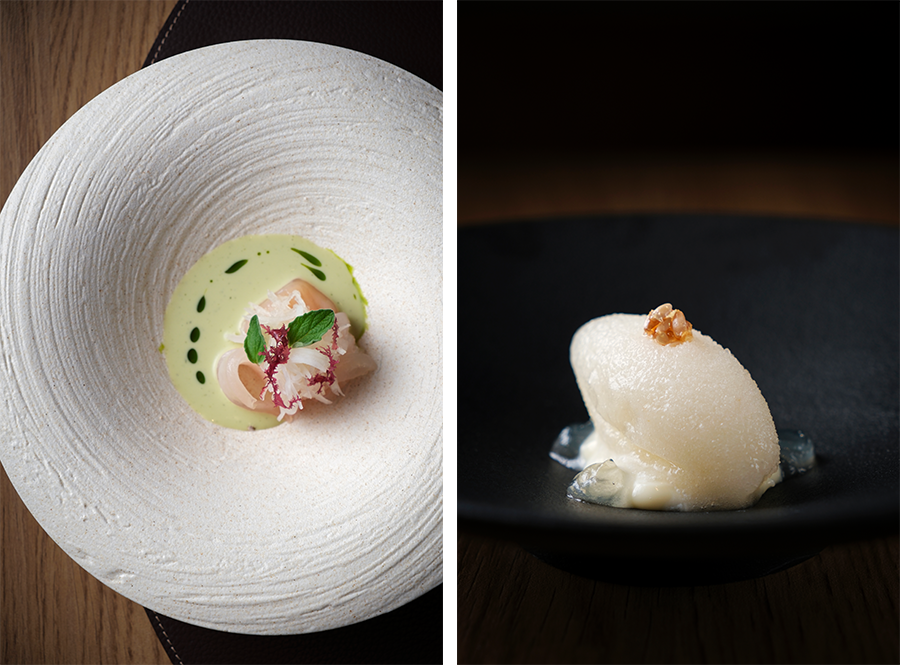
(Right) Chamoe and yuja sorbet—a reinterpretation of a fruit that may be unfamiliar to local diners
Q. What was the most memorable reaction from local diners?
Lee, Kyoung-won
The response to ganjang gejang was the most surprising for me. I was initially quite concerned since raw food is typically not part of Hong Kong’s dining culture. However, the patrons genuinely enjoyed it, which completely overturned my assumptions and eased my concerns. Cold dishes like dongchimi also received enthusiastic feedback. This helped me realize that the diverse temperature profiles of Korean cuisine could resonate with local palates.
Cheon, Dong-min
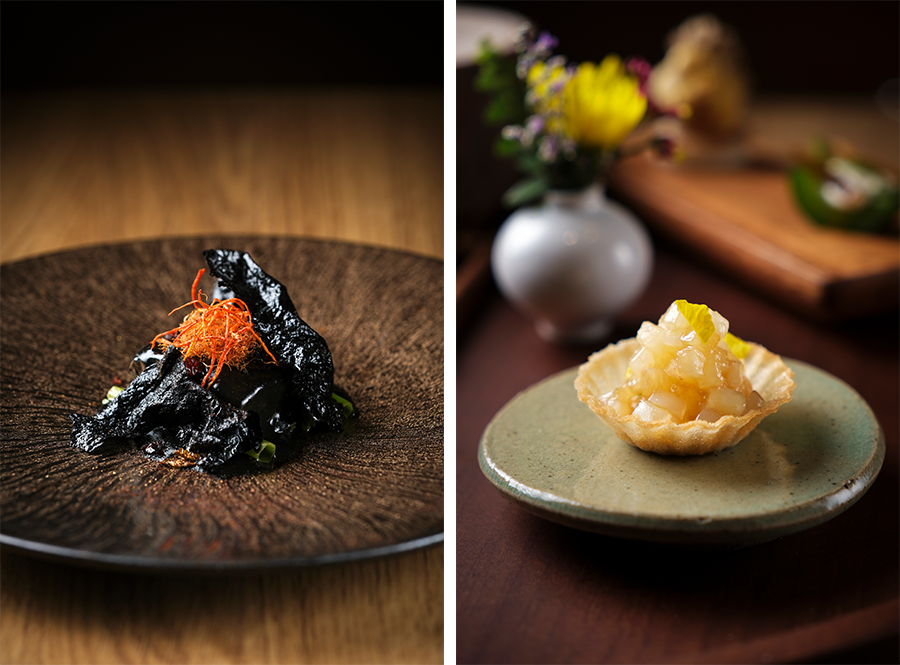
We made several subtle adjustments to the menu throughout the operation. For the Mystery Chicken, we brought in a slightly sweeter, larger dried chili sourced locally in Hong Kong and deep-fried it. For the Cuttlefish Tart, we brushed the tart shell with edible ink to evoke the look of traditional brush strokes for a more Korean touch. Fine-tuning these details on-site was not only enjoyable but also boosted our confidence as we observed the guests’ enthusiastic responses.
Lee, Su-neung
Many guests enjoyed the food with a remarkably open attitude. I was especially happy to see those trying Korean cuisine for the first time responding with genuine curiosity. Since I was plating dishes at the front of the service area, I could see their every expression—some guests nodded politely when our eyes met, while others smiled and gave thumbs-up gestures. Those moments made me think, “Ah, we’re doing well.”
Q. It could not have been easy for three chefs to work together on creating a single multi-course meal. How did you navigate the teamwork?
Cheon, Dong-min
Chefs are known for having distinct personal styles and strong convictions. This can make collaboration challenging, but we focused on turning our differences into strengths. We made sure to leave time at the end of each day for open discussions. I believe this effort was key to fostering an environment where we could communicate openly while maintaining mutual respect, even in our fast-paced kitchen.
Lee, Kyoung-won
That’s right. Our different styles actually worked to our advantage. I tend to create dishes that are bright and vibrant, while Chef Su-neung has a gift for intuitive flavors and Chef Dong-min excels at storytelling through food. These distinct qualities naturally came together and harmonized seamlessly into the course.
Lee, Su-neung
In the kitchen, you can always expect unexpected challenges. At this pop-up, we had guests who didn’t eat beef, followed vegan or halal diets, or had food allergies we had not foreseen. At times, we had to adjust the menu mid-course or quickly source alternative ingredients. Whenever something like that happened, we responded swiftly, with each of us instinctively stepping into roles where we could leverage our individual experience and strengths.
Q. How did this pop-up experience change you as a chef?
Lee, Kyoung-won
Working on this project felt like running a real restaurant abroad. It gave me a deeper sense of confidence in my own cooking and brought me one step closer to my dream of becoming a chef-owner. In line with the mission of Cuisine.K, I hope to share the beauty of Korean cuisine with the world.
Cheon, Dong-min
I was reminded once again of how appealing Korean ingredients can be on a global stage. It also helped clarify my direction as a chef, and now I’m eager to take part in more Cuisine.K programs. One day, I hope to open a Michelin-starred restaurant of my own as a Cuisine.K alumnus and serve as a shining example of this journey.
Lee, Su-neung
This was my first time presenting Korean cuisine abroad, and I think experiencing a range of local reactions firsthand helped me grow immensely as a chef. Just as this experience pushed me forward, I hope to one day work with Cuisine.K again to share the rich value of Korean cuisine with the world.
Limited resources, unfamiliar systems, and a stream of new guests each day—amid these constraints, the three chefs each found their own way to cook, adapt, and expand the possibilities of Korean cuisine. The Hong Kong pop-up became a stage for bold experimentation, where they preserved the authenticity and essence of Korean food while infusing it with their individual styles. Looking ahead, Cuisine.K will continue its mission to nurture the next generation of chefs and globalize Korean cuisine.