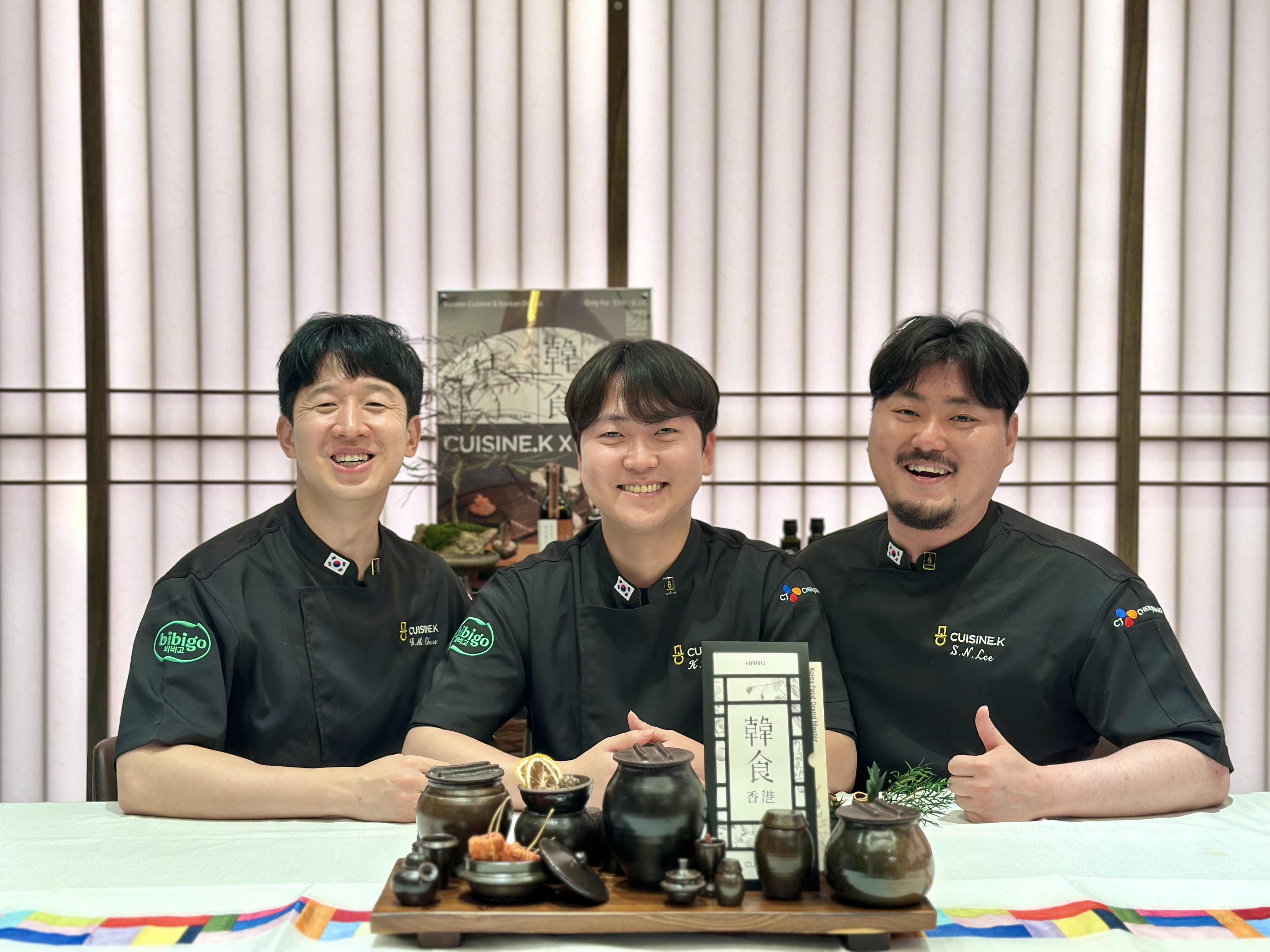
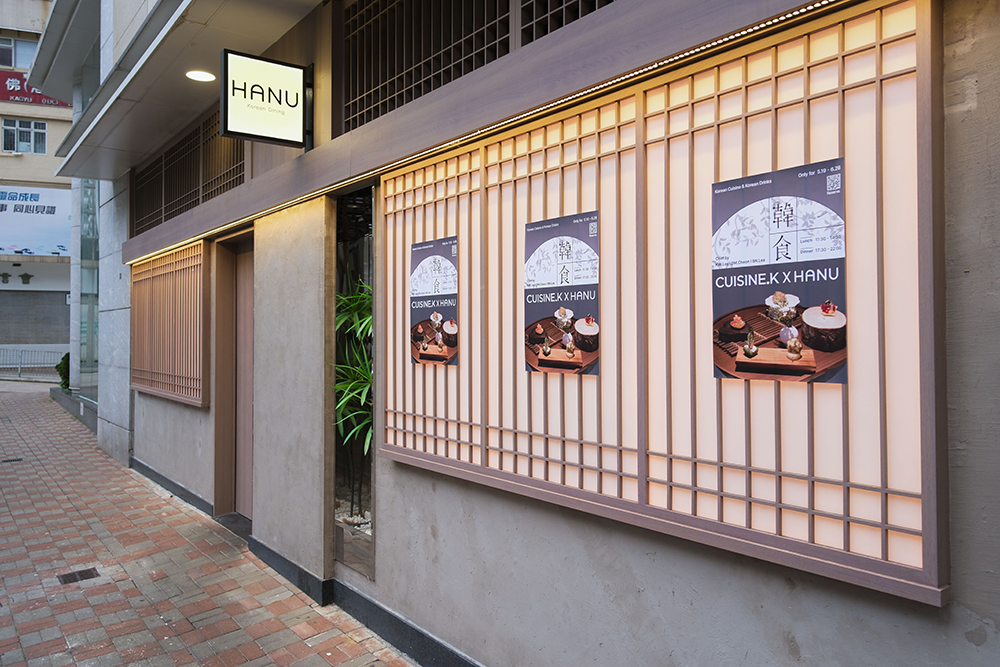
Cuisine.K is a CJ CheilJedang initiative dedicated to advancing and globalizing Korean cuisine by discovering the next generation of young K-food chefs. The program focuses on nurturing promising talent by offering opportunities such as Master Class and dining internships in Korea. The pop-up restaurant program provides aspiring chefs with an actual restaurant space and marketing support to simulate the experience of running their own restaurant. Participants design their own menus and interact with guests, gaining hands-on experience and insight into the full spectrum of operating and managing a Korean dining establishment.
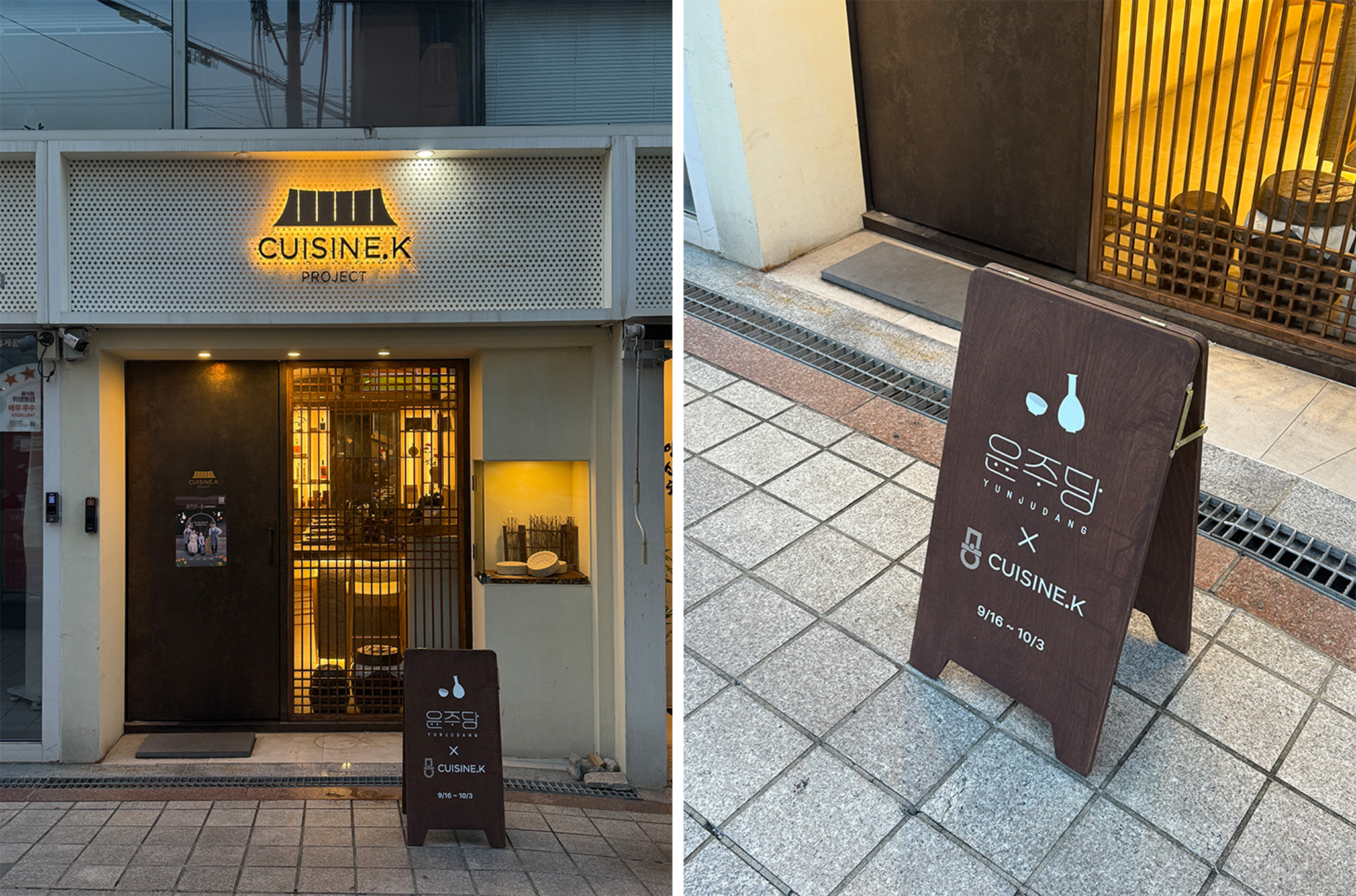
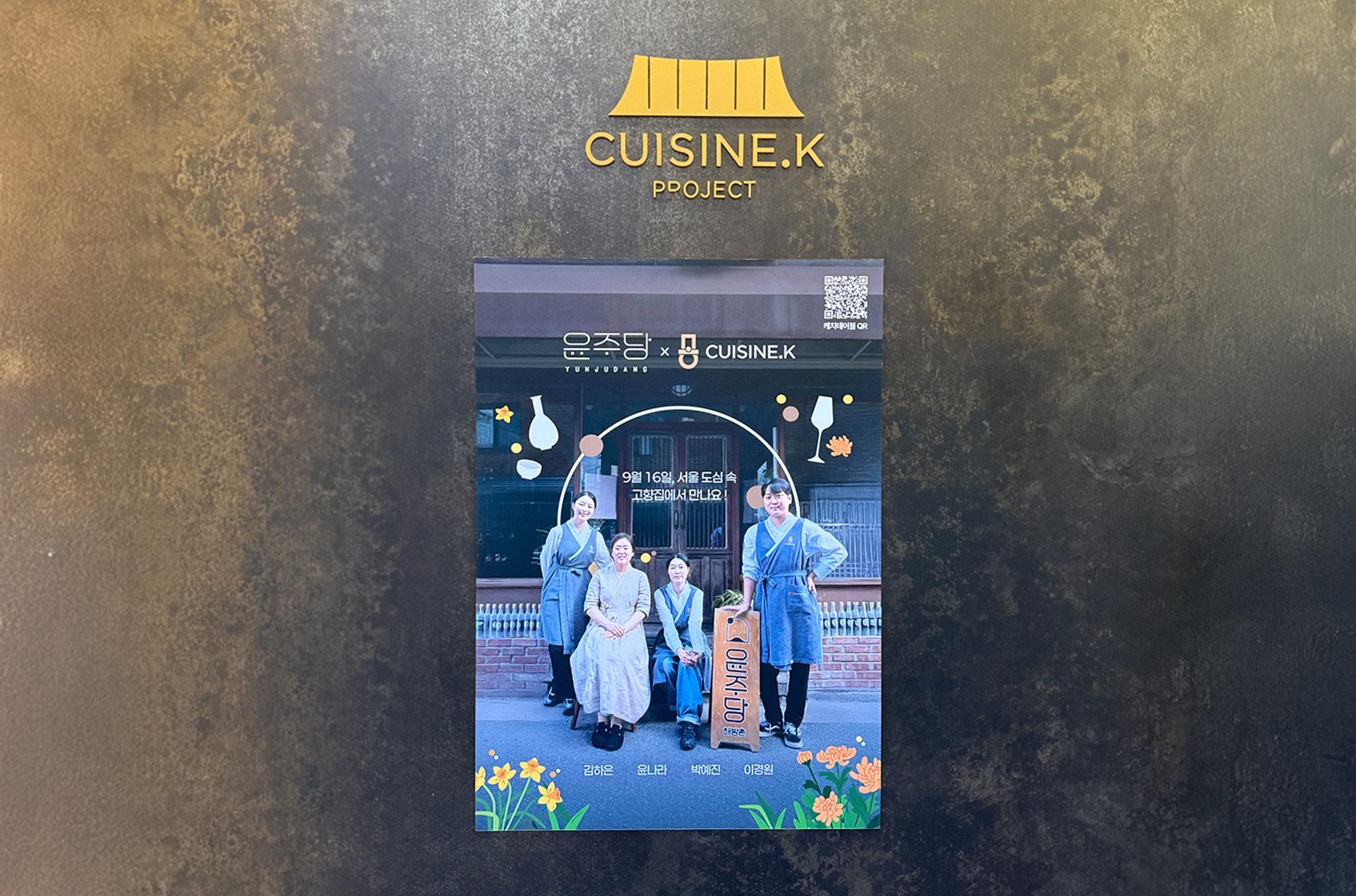
A unique pop-up restaurant, inspired by the cozy atmosphere of a traditional Korean tavern, has opened in the heart of Seoul’s Gangnam district. Offering a dining experience that pairs traditional Korean liquor with authentic cuisine, guests are invited on a journey to explore and discover their own tastes and preferences. Cuisine.K, CJ CheilJedang’s platform for nurturing young Korean chefs, has partnered with Chef Yun, Na-ra of the traditional liquor dining brand YUNJUDANG to bring this special pop-up to life.
Three Cuisine.K alumni—Chef Lee, Kyoung-won, Chef Park, Ye-jin, and Sommelier Kim, Ha-eun—have created a space where the warmth of a traditional tavern is seamlessly woven into Korean cuisine. Here, guests can discover traditional liquors that suit their tastes and experience the layered charm of Korean food through a five-course dinner. With excitement for a fresh take on Korean cuisine paired with traditional liquors, I stepped into the Cuisine.K restaurant.
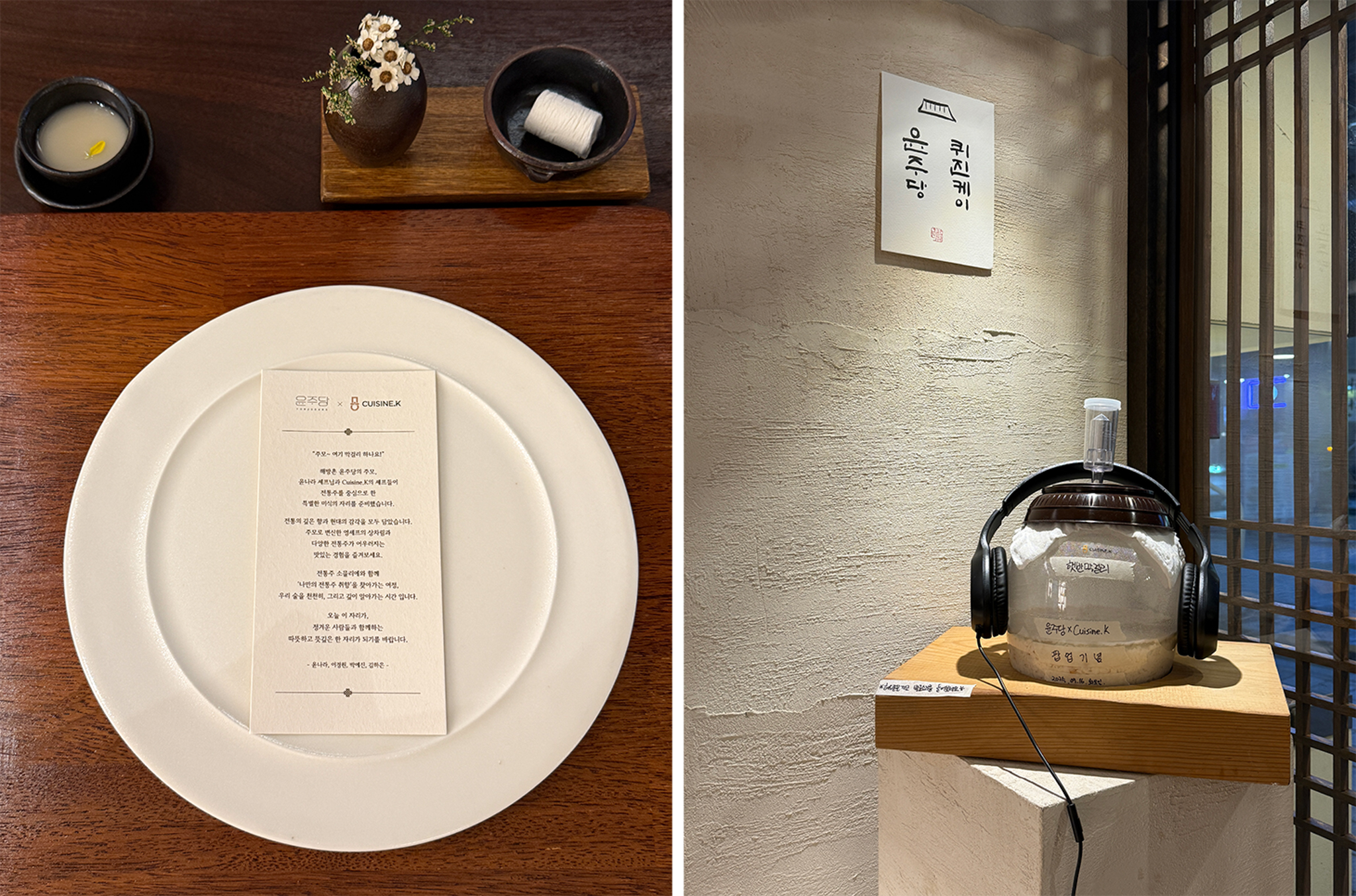
“One Makgeolli for the table here!”
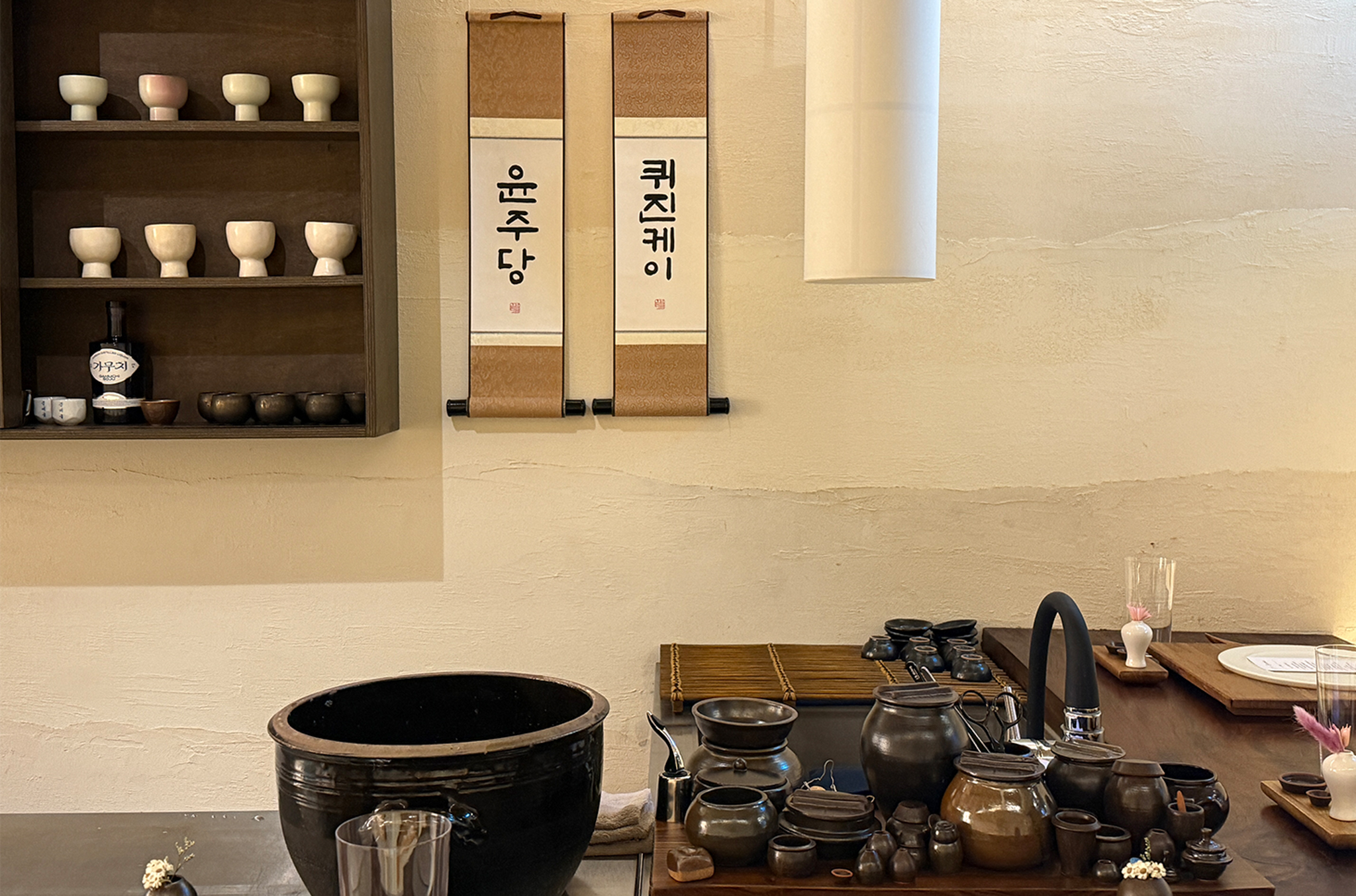
The subtle scent of nuruk (grain-based fermentation starter) greeted us as I entered. The walls were lined with traditional paper, and the shelves were adorned with nuruk and small earthenware jars. A jar of “Hetbahn makgeolli” in one corner immediately caught our attention. Word has it that the chefs brewed it together on the opening day. The bubbling sound of fermentation seemed to fill the room, adding to the immersive atmosphere.
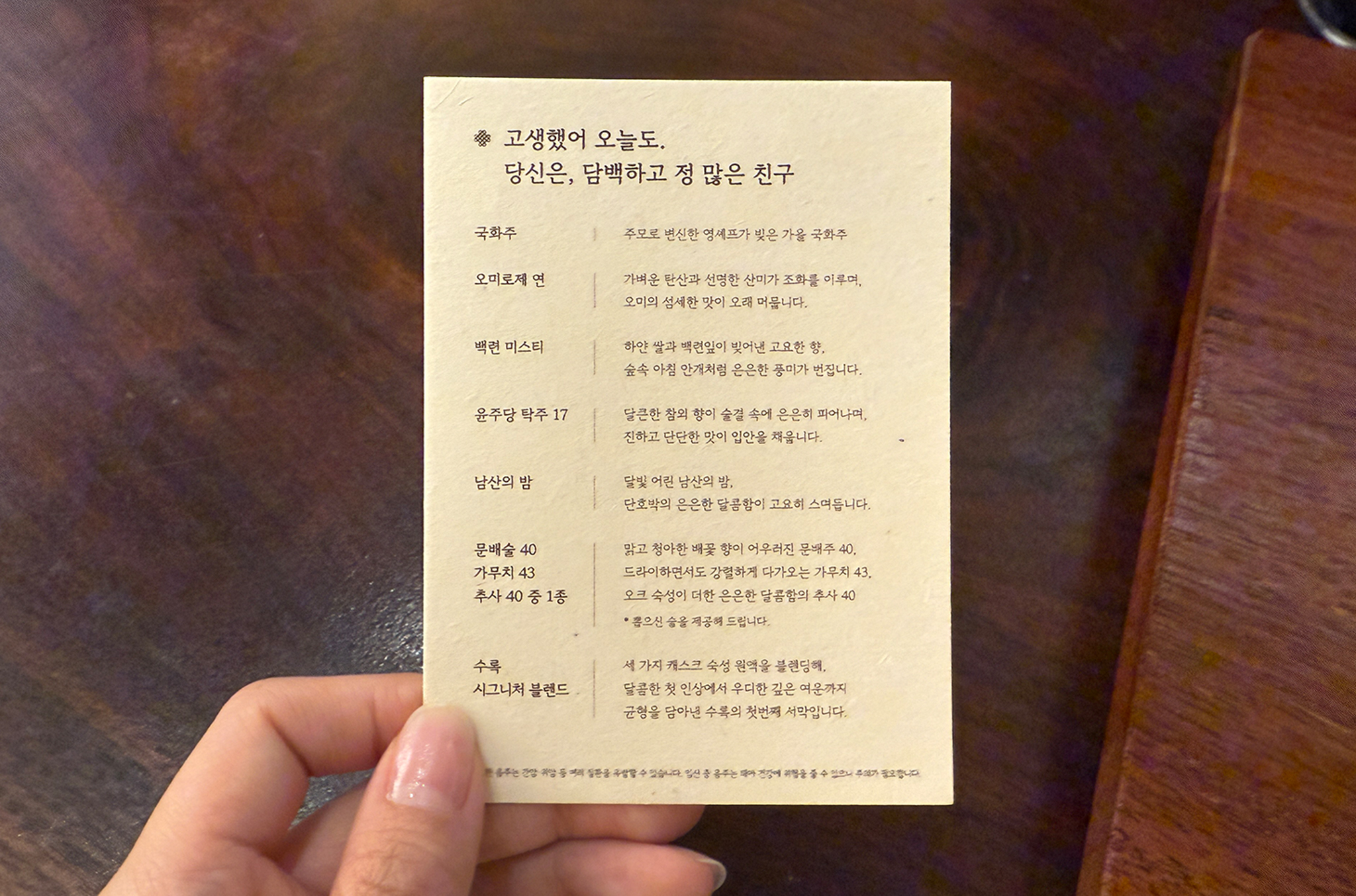
A chrysanthemum wine brewed for this pop-up by the chefs-turned-tavern keepers was served as a welcome drink. As I sipped on the welcome wine, we scanned a QR code to take a questionnaire, which matched us with one of four dinner courses each paired with different traditional liquors. The “Sparkling Dinner” was designed for the spunky-spirited, while the “Serenity Dinner” catered to mellow autumn souls. I was recommended the “Another Hard-Fought Day Dinner,” which started out with the sweet tang of omjia (Schisandra chinensis berry) and closed with the clean finish of takju (a type of rice wine).
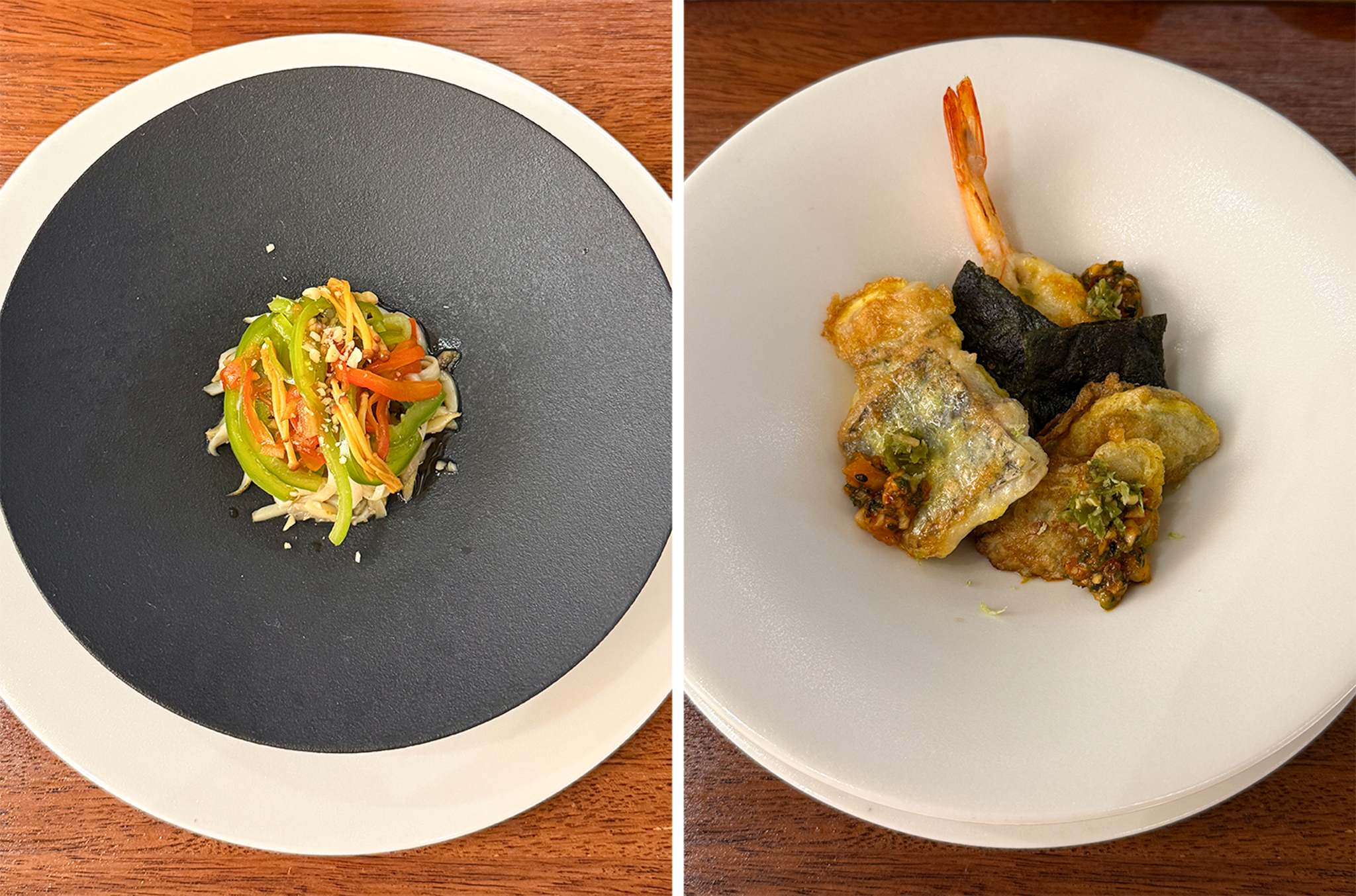
Drawn to the delicious sizzle, our eyes turned toward the kitchen. The first dish to arrive was the abalone japchae—tender slices of abalone nestled among crisp, vibrant vegetable strips. The texture of the bell peppers and green peppers gave the dish a rhythmic lift. Paired with it was “Omirosé Yeon,” whose gentle fizz and subtle tartness brought a clean, finishing touch to the meal.
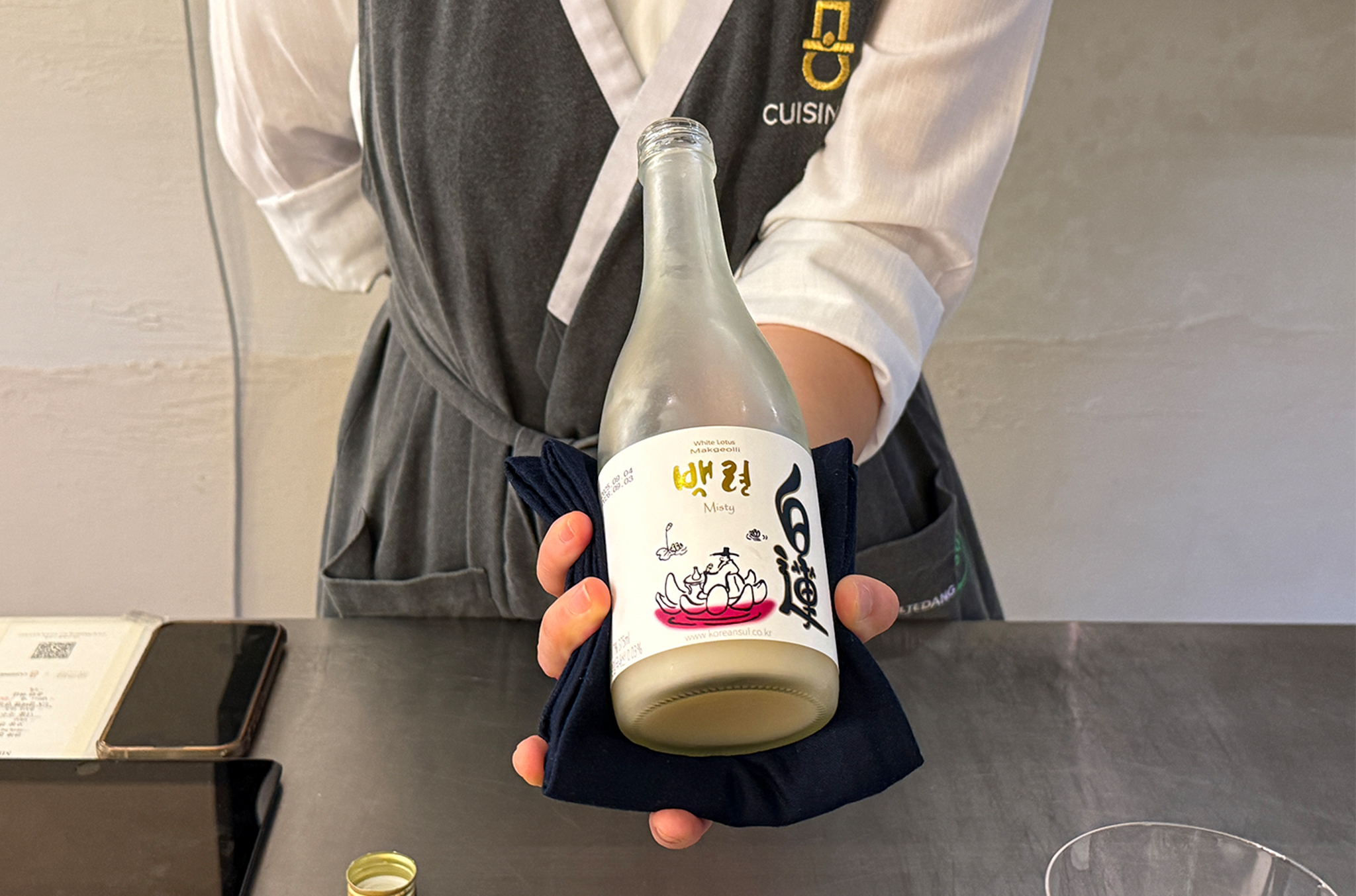
The arrival of the assorted jeon brought the pop-up’s tavern-inspired concept into full view. On a single plate were four types of jeon—jumbo shrimp, maesaengi (soft seaweed), oyster, and croaker. The distinct aroma of each ingredient mingled with the dipping sauce made from ssiat jeotgal (salted and fermented seafood mixed with a variety of seeds) and Cheongyang chili, enhancing the flavors without overwhelming the palate. Another glass of “White Lotus Makgeolli: Misty” was served. This fragrant lotus leaf-infused rice wine gently enveloped the jeon’s rich savor.
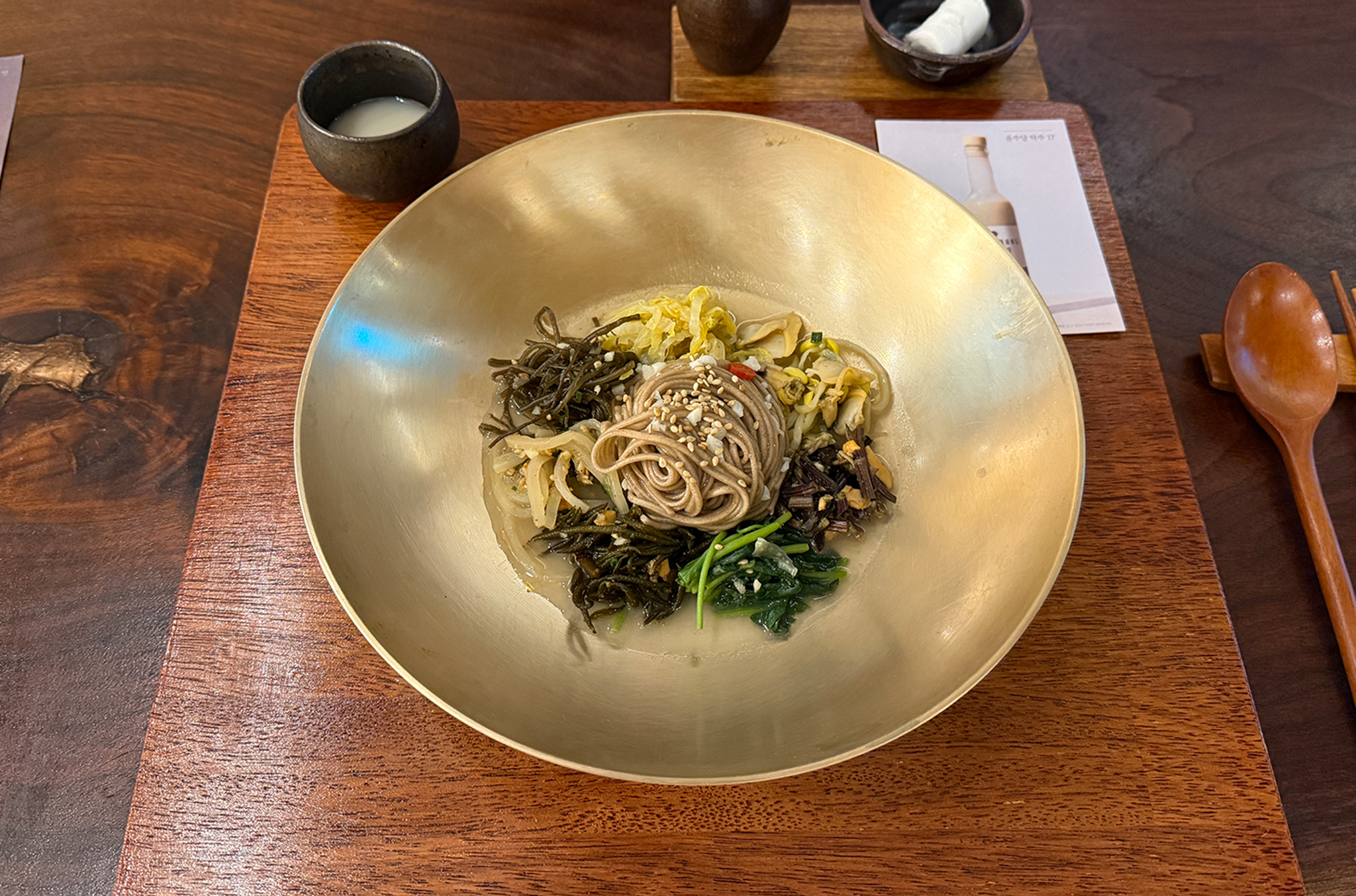
The third course was neomul noodles, inspired by Tongyeong namul bibimbap. “In Tongyeong, namul (seasoned vegetables and stems) is called ‘neomul,’” Chef Lee, Kyoung-won explained with a smile. “I’ve reimagined the rice as noodles, pairing them with neomul seasoned with seafood for you to enjoy.” Seven kinds of seasonal vegetables were delicately arranged on top. The flavors of clams and mussels had seeped in, and with the first bite, a clean, briny saltiness gave way to a savory sweetness.
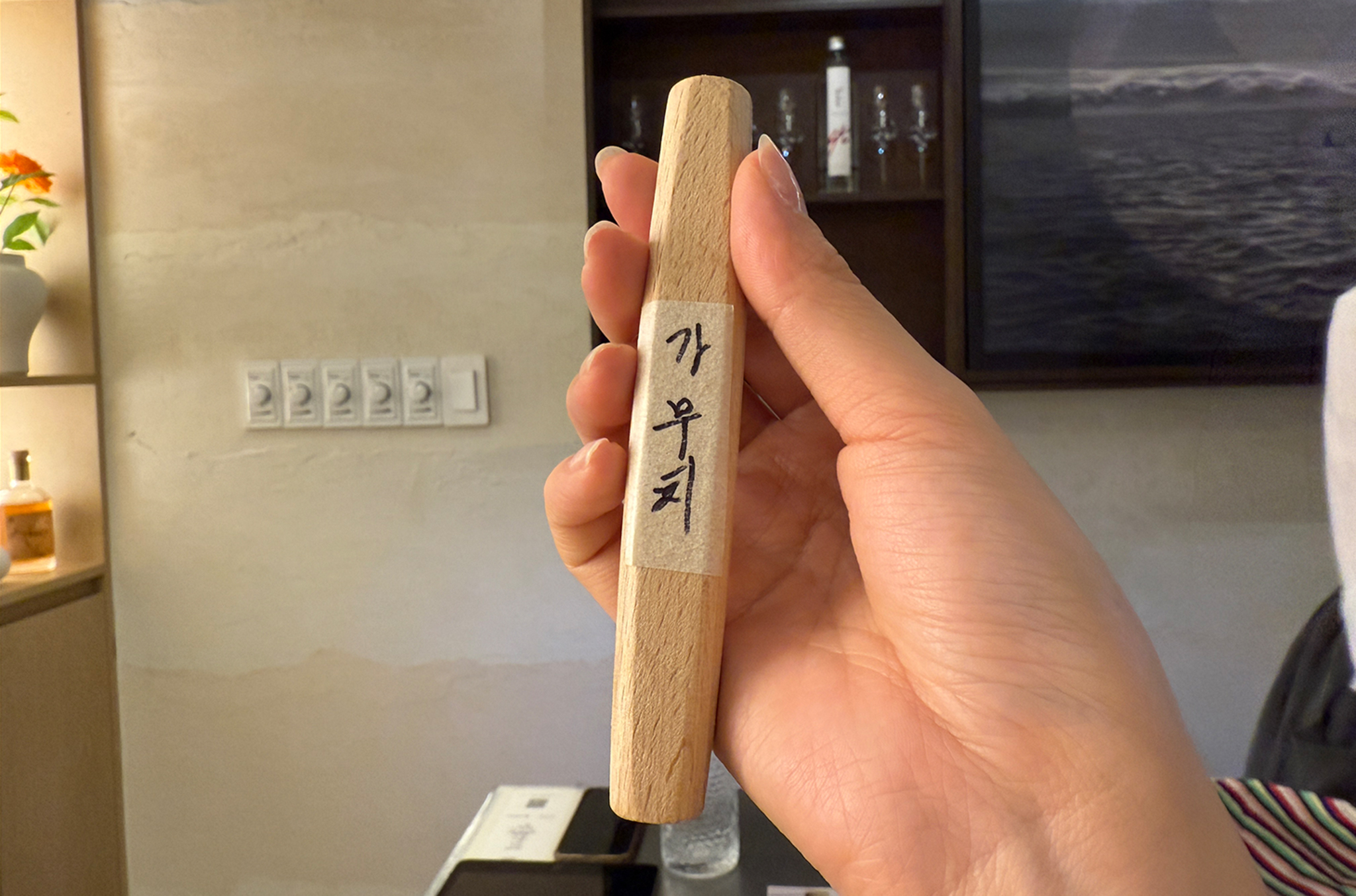
During a brief interlude, a small yutnori (Korean folk game) event offered the guests a chance to taste another traditional liquor. Written on the yut stick I carefully selected was “Gamuchi.” The barrel-aged, distilled spirit with a high alcohol content delivered an intense kick followed by a lingering echo of rice.
Sommelier Kim Ha-eun placed small ceramic cups on the table. “I made these myself—please pick one you like.” From the pairing selections to each handcrafted cup, the care that went into this pop-up event was evident. Then came the highlight of the meal—braised “LA-cut” short ribs and rice set. The ribs weren’t grilled but steamed to a glossy tenderness. They were served alongside gondeurae rice (rice cooked with gondeurae greens) and a clear soup with shiitake mushrooms. Filling the chosen cup was “Night in Namsan,” YUNJUDANG’s signature craft makgeolli delicately scented with sweet pumpkin.
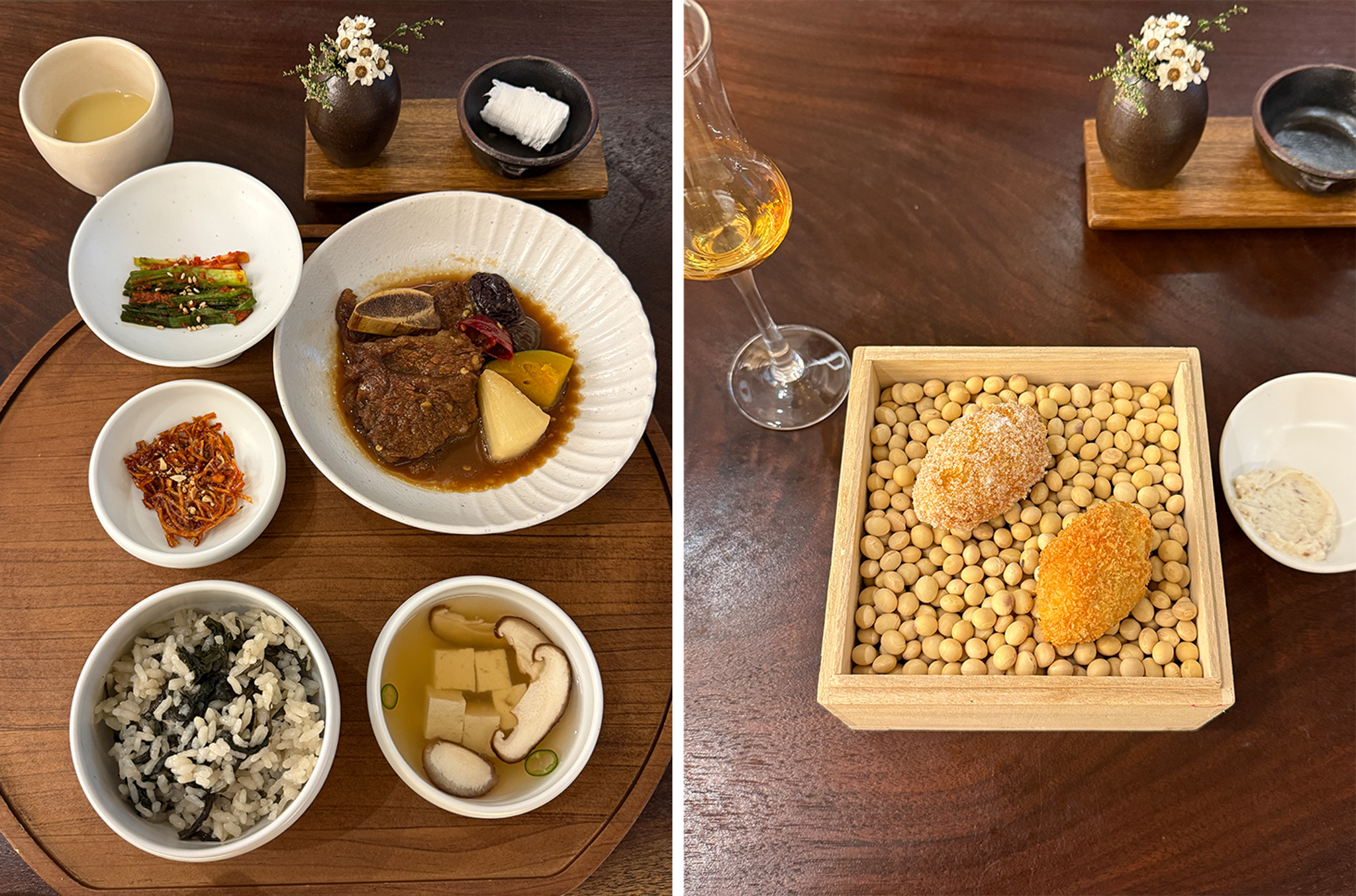
The final course was fried songpyeon. Inside the rice cake was braised fig, perfectly in season for autumn, layered over nutty soybeans. It was served with a cream sauce made from rice lees (fermented sediment from alcohol making). “We balanced out the tanginess of the cream sauce and lees with the rich nuttiness of tofu,” explained Chef Lee, Kyoung-won. Just as he described, creaminess and tartness unfolded in turns on the palate. The form paid homage to tradition, but the flavor was entirely new and pleasantly surprising.
By not simply preserving tradition but reinterpreting it, the dinner made it clear that even familiar Korean food can be made to feel entirely new. Each course carried the imprint of the young chefs’ thoughtful experimentation and creativity. From ingredients and techniques to the pairing of food and liquor, it was a front-row experience of watching all their deliberations come to life through flavor.